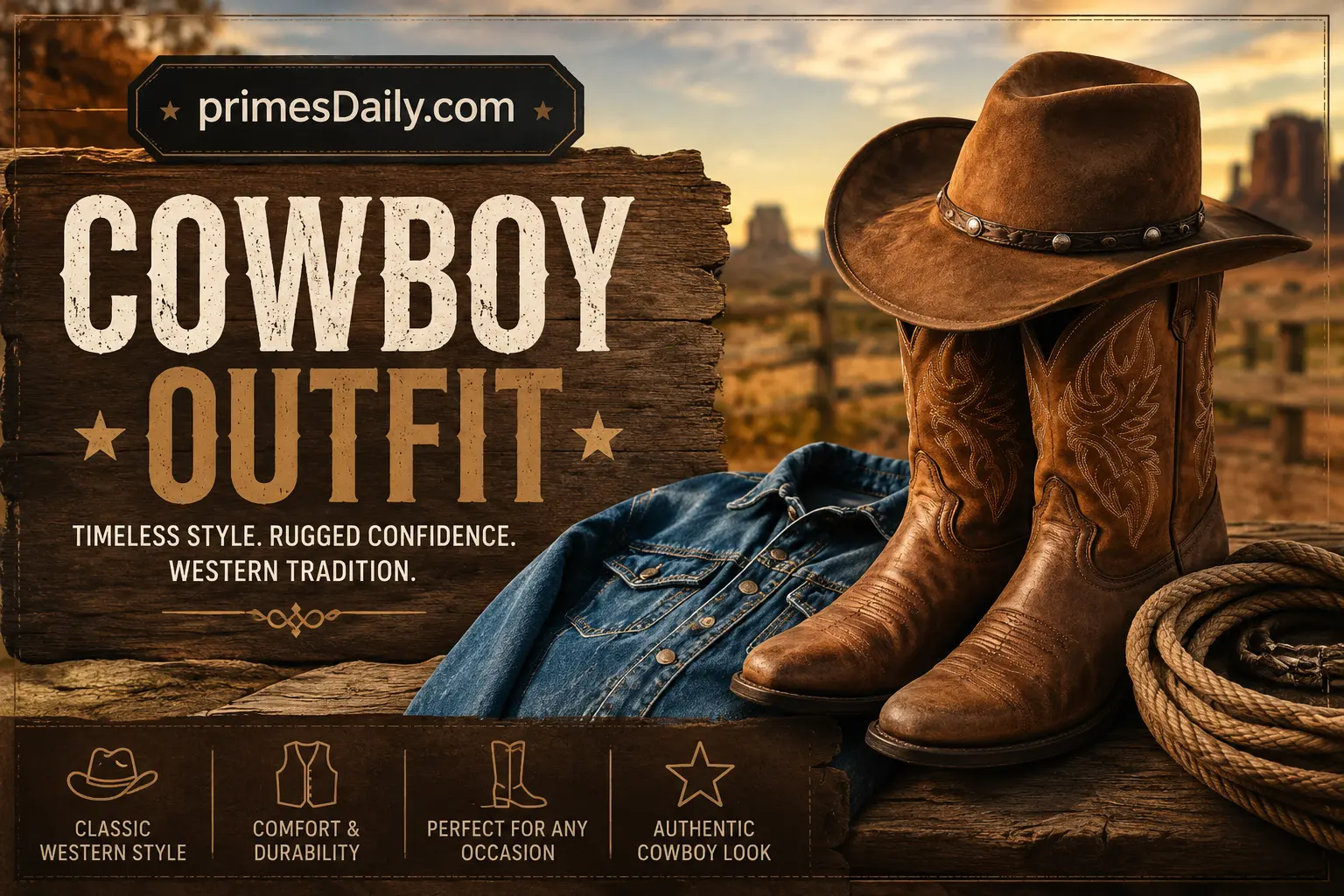
If you’ve ever stood in front of your closet before a rodeo party, a country concert, or a Halloween bash wondering how to put together western clothing that actually looks put-together instead of costume-y, you’re not alone. Most people searching for outfit ideas end up with ten different browser tabs, half of them showing cheap Halloween costume sets and the other half showing $400 designer pieces, with nothing in between that actually answers the basic question: what do I wear, and how do the pieces go together?
This guide is meant to be that missing middle ground. Whether you need a casual western look for a night out, a full western costume for cosplay, a toddler Cowboy Outfit for a birthday party, or a mens cowboy boots outfit that won’t feel like a joke at a wedding, everything is covered here — the pieces, the styling logic, the occasions, and the mistakes people make. No need to hop between five different sites. By the end you’ll know exactly what to buy, how to wear it, and why certain combinations work while others fall flat.
Western Clothing and Apparel
Western clothing and apparel didn’t start as a fashion trend — it grew out of practical ranch work in the 19th century American frontier, and every piece still carries a bit of that working-cowboy logic even now. A cowboy hat blocked sun and rain. Boots protected feet from stirrups, snakes, and rough terrain. Denim held up to long days on horseback. Over time, movies, country music, and rodeo culture turned these functional garments into a recognizable style, and today western apparel splits into two broad lanes: authentic ranch-inspired clothing (think Wrangler jeans, real leather boots, felt hats) and stylized fashion pieces (rhinestone shirts, fringe vests, statement belt buckles) built more for looking the part than working cattle.
Modern shoppers usually fall into one of these camps: people who want a genuinely wearable everyday western look, and people who need a themed costume for a specific event. Both are valid, and the pieces overlap more than you’d think — a good pearl-snap western shirt works in both worlds depending on how you accessorize it.
Essential Pieces of a Cowboy Outfit
A complete look is built from six core categories: hat, shirt, coat or vest, trousers, neckwear, and boots. You don’t need every single piece for every occasion, but understanding what each one does helps you build a look that feels intentional rather than random.
Cowboy Hat Styles
The hat is the single most identity-defining piece of any western look, so getting it right matters more than any other item. Felt hats (usually wool or a wool-fur blend) work best for cooler months and formal occasions — a black felt cowboy hat outfit reads elegant and slightly dramatic, which is why performers and grooms often lean toward it. Straw hats are the warm-weather equivalent, lighter and more casual, ideal for a summer cowboy outfit or a daytime rodeo. Color matters too: a classic tan or brown cowboy hat outfit blends into almost any wardrobe, while a white cowboy hat outfit or all-black cowboy outfit makes more of a statement and photographs better for events.
If you’re new to hats, get the crown shape and brim width matched to your face shape before worrying about color — a hat that’s too wide-brimmed for a smaller frame will wear you instead of the other way around.
Cowboy Shirt Options
The western shirt is defined by two things: a shaped yoke across the front and back, and pearl-style snap buttons instead of standard buttons. Beyond that baseline, there’s a lot of room to play. Plaid and gingham patterns lean casual and rugged. Solid-color pearl snap shirts with piping and embroidery lean dressier and are a favorite for a cowboy formal outfit or a wedding. Fringe and rhinestone shirts belong almost entirely to performance and costume contexts — think rhinestone cowboy aesthetics rather than everyday wear.
For men building a cowboy outfit for men, a well-fitted plaid snap shirt tucked into jeans is close to foolproof. For women, the same shirt style knotted at the waist or worn open over a tank creates an easy, put-together cowgirl outfit without trying too hard.
Cowboy Coat and Vest
Layering pieces separate a thrown-together look from a styled one. A suede or leather fringe vest is the most recognizable layering piece in western fashion and works for both a casual day look and a full western costume. For colder weather or more formal settings, a duster coat (the long, dramatic riding coat popularized by spaghetti westerns) or a simple denim jacket does the job. Men aiming for a formal cowboy outfit sometimes reach for a western-cut blazer with a yoke seam and smile pockets — a smart middle ground between a suit jacket and a full costume.
Cowboy Trousers and Jeans
Jeans are non-negotiable in almost every western look, but the cut matters. Bootcut and straight-leg jeans are the traditional choice because they sit properly over boot shafts without bunching — skinny jeans tend to look off paired with traditional boots, though it’s become a popular modern styling choice for a more fashion-forward cowboy boots and jeans outfit. Darker denim reads dressier; lighter or distressed denim reads more casual. For women, a denim skirt or shorts paired with cowboy boots is one of the most searched combinations for festivals and country concerts, and it works because the boots anchor the whole outfit visually.
Cowboy Neckwear – Bandana and Bolo Tie
Neckwear is the detail that finishes a look. The bandana, tied loosely or worn as a neckerchief, started as a practical dust-and-sweat solution for postwar cowboys and now functions purely as a style accent. The bolo tie is the more formal option — a braided cord with a decorative clasp, historically tied to Southwestern culture and still recognized as acceptable formal wear in states like Texas, New Mexico, and Montana. A bolo tie cowboy outfit signals “I know what I’m doing” far more than a bandana does, so save it for events where you want to look intentional rather than casual.
Cowboy Boots and Footwear
Boots are arguably more important than the hat for everyday wear, since they’re the piece that changes how you walk and how the rest of the outfit drapes. Pointed-toe and snip-toe boots are the classic silhouette; square-toe boots have become more popular for a modern, slightly less costume-y look. Ankle-height “roper” boots suit an everyday cowboy boots outfit for men, while taller shaft boots pair better with dresses, skirts, and shorts for women because more of the boot is visible. Leather color (black, brown, tan, white) should generally match your belt, not necessarily your hat.
Men’s Cowboy Outfit Ideas
For a casual mens cowboy boots outfit, start with a plain or subtly plaid western shirt, straight-leg or bootcut jeans, and brown leather boots — skip the hat entirely if you’re not fully committed to the look, since a shirt-and-boots combo alone reads western without tipping into costume. For a mexican cowboy outfit or vaquero-inspired look, add an embroidered western shirt and a felt hat with a wider brim, which nods to the vaquero roots of American western wear. For a formal cowboy outfit for men, swap the plaid shirt for a solid black or white pearl-snap shirt, add a bolo tie, and finish with polished boots and a black felt hat — this combination works well for a cowboy wedding outfit where you want to honor the theme without looking like you’re in costume.
For the latest, updated, and unique information, visit Best Ski Resorts in Colorado.
Women’s Western Wear and Cowgirl Outfit
Women’s western styling has more range than men’s because so many non-western pieces (mini dresses, denim shorts, midi skirts) pair naturally with boots and a hat. The formula that consistently works: pick one clearly western anchor piece (boots or a fringe vest), then keep everything else simple so the outfit doesn’t compete with itself.
Cowgirl Boots and Shoes
Cowgirl boots come in more color and embellishment variety than men’s boots — embroidered shafts, colored leather, and stacked heels are common. A pointed or snip-toe boot in tan or white pairs well with almost any dress length, while a chunky-heeled boot gives more comfort for a full day at a festival or concert.
Western Wear Accessories
Turquoise jewelry, concho belts, and wide leather cuffs are the accessories that do the most visual work with the least effort. A single statement piece — a turquoise bracelet or a large belt buckle — is usually enough; stacking too many western accessories at once tends to look costume-y rather than styled.
Women’s Western Hats
Straw hats with decorative bands suit summer festival looks, while shapeable felt hats with a wider brim work better for photos and cooler-weather events. Cowgirl-specific hat shapes tend to have a slightly higher crown pinch than men’s hats.
Women’s Western Clothes
Beyond boots and hats, western-cut tops, fringe vests, and prairie-style skirts round out the category. A prairie skirt (knee-length, often gingham or floral) is a direct callback to 19th-century western dress and works well for a more historically accurate or vintage-leaning look.
Women’s Ranch Wear
Ranch wear leans more functional than fashion-forward: durable denim, flannel, and canvas outerwear built for actual outdoor work rather than photos. If you want an authentic (not costume) western wardrobe, ranch wear brands are usually a better source than costume retailers.
Women’s Rodeo Wear
Rodeo-specific clothing tends to be brighter, more fitted, and more performance-oriented — think embroidered western shirts, fitted jeans, and durable boots meant to hold up to a full day of activity, not just standing around.
Women’s Winter Western Wear
Layering is the key challenge here. A shearling or suede coat over a western shirt keeps the aesthetic intact in cold weather, and boots with a slightly higher shaft help keep ankles warm without sacrificing the silhouette.
Women’s Western Dress Shirts
A western dress shirt — piped, embroidered, with a contrasting yoke — is the dressier cousin of the plaid snap shirt and works especially well for a formal or semi-formal cowboy outfit, paired with tailored trousers instead of jeans.
Cute Western Handbags and Purses
Tooled leather bags, fringe crossbody styles, and concho-detailed purses are the accessory category most people forget, but a western-styled bag ties a look together far more effectively than generic accessories.
Baby Cowboy Outfit and Photo Props
For newborn and infant looks, comfort and softness matter more than authenticity — soft cotton western shirts, elastic-waist jeans, and a lightweight felt or straw hat (sized correctly, since oversized hats are a common photo-prop mistake) create an adorable baby cowboy outfit without irritating sensitive skin. Bandana bibs are a practical add for babies who drool, doubling as both prop and function.
Handmade Crochet Baby Cowboy Outfit
Crochet cowboy sets have become a popular baby shower and photo-prop gift, usually including a crocheted hat, vest, and sometimes tiny “chaps.” These work well for both newborn photos and as keepsake gifts because they’re soft, breathable, and don’t have the small hardware (snaps, buckles) that store-bought infant costumes sometimes include.
Kids Cowboy Outfit for Costume Parties
For toddlers and older kids, durability and ease of movement matter more than exact styling. A simple vest-and-hat combo over regular clothes is usually enough for a themed party, while a full costume with attached chaps and a holster works better for dress-up play or Halloween. Sizing up slightly is smart for costumes kids will wear for more than one event, since felt hats and vests don’t stretch the way regular clothing does.
Cowboy Outfit for Halloween
Halloween costumes lean more theatrical than everyday western wear — sheriff badges, toy holsters, exaggerated fringe, and bandana face coverings are common additions that wouldn’t appear in a daily-wear look. A few practical notes: cheap costume hats often don’t hold their shape after one wear, so if you want something reusable, spend slightly more on the hat specifically even if the rest of the costume is budget-friendly. Layering a costume vest over a plain long-sleeve shirt also solves the common complaint about scratchy costume fabric against skin.
How to Style a Cowboy Outfit
A few styling principles apply regardless of occasion. First, pick one “hero” piece — hat, boots, or a statement vest — and build everything else around it rather than trying to make every item stand out equally. Second, match metals and leather tones: a silver belt buckle with gold-toned boot hardware looks unintentional, so keep hardware consistent. Third, dress up or down through fabric choice rather than adding more pieces — a plain cotton shirt reads casual, while the same silhouette in a piped or embroidered fabric reads dressy without changing the actual outfit structure. Finally, fit matters more in western wear than almost any other style category, because oversized hats, boots, and vests read as costume rather than clothing — sizing correctly is the single biggest difference between looking styled and looking dressed up.
Cowboy Outfit Trends 2026
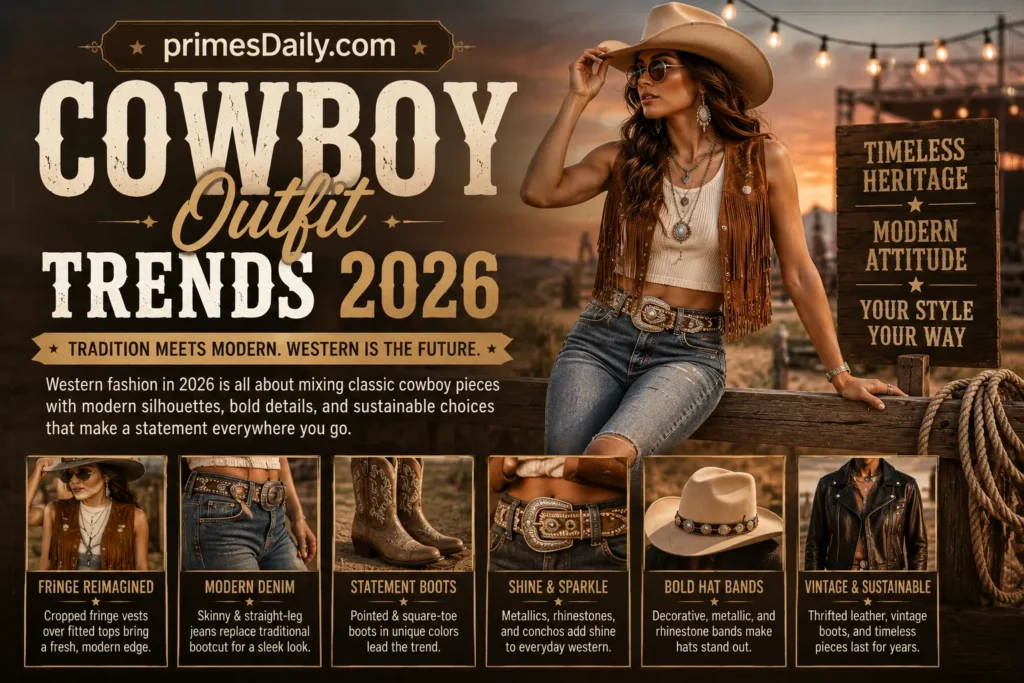
Current western fashion trends lean toward mixing traditional pieces with modern silhouettes rather than full period-accurate looks. Cropped fringe vests over fitted tops, skinny or straight-leg jeans instead of strict bootcut, and pointed square-toe boots are showing up more in mainstream fashion, driven partly by country-pop crossover artists and festival culture bringing western styling into non-western contexts. Metallic and rhinestone accents, once reserved for performance wear, are increasingly appearing in everyday accessories like belts and hat bands. Sustainable and secondhand western wear has also grown, since vintage leather boots and jackets tend to be both more durable and more affordable than new synthetic alternatives.
Where to Buy the Best Cowboy Outfit Online
Retailers generally split into three categories worth knowing before you shop. Costume-focused retailers carry affordable, complete sets (hat, vest, bandana, badge) ideal for one-time events like Halloween or theme parties, but the materials usually aren’t built for repeat wear. Western specialty retailers carry authentic, durable pieces — real leather boots, wool felt hats, genuine pearl-snap shirts — at a higher price point but with far better longevity, and these are the better choice if you want a wardrobe piece rather than a costume. General fashion retailers now carry western-inspired pieces seasonally, especially during festival months, and these work well if you want a single trendy piece (like a fringe vest or western boots) without committing to a full themed wardrobe. Whichever route you choose, checking the fabric and sole material before buying boots specifically is worth the extra minute — synthetic soles wear out fast if you plan to actually walk in them regularly.
FAQs
What is a cowboy outfit called? It’s most commonly called western wear or a western outfit. “Cowboy costume” typically refers to a themed, event-specific version, while “western wear” refers to everyday wearable pieces.
What makes an outfit look authentically western instead of costume-y? Fit, fabric quality, and restraint. Correctly sized boots and hats, natural materials like leather and felt, and one or two standout pieces (rather than every item being loud) are what separate a styled western look from a costume.
Can I wear a cowboy outfit without boots? Yes, though boots are the piece that most strongly signals the style. Sneakers or other footwear can work for a more casual, western-inspired look, but boots are what push an outfit fully into western territory.
What should I pair with cowboy boots besides jeans? Denim shorts, midi and mini dresses, prairie-style skirts, and even tailored trousers for a more formal look all pair well with boots — the boot style (heel height, shaft height) should shift depending on how dressy the rest of the outfit is.
Is a bolo tie or a bandana more formal? A bolo tie is considered more formal and is even recognized as acceptable formal neckwear in some U.S. states. A bandana reads more casual and rugged.
How do I choose the right cowboy hat size? Measure around your head where a hat would naturally sit, and match that to the hat’s internal size marking rather than relying on “small/medium/large” labeling, since felt hats especially run differently across brands.
What’s the difference between a cowboy outfit for men and women stylistically? Men’s western wear tends to stay closer to traditional pieces (shirt, jeans, boots, hat), while women’s western styling incorporates dresses, skirts, and shorts alongside the classic boot-and-hat anchor pieces, giving more flexibility in silhouette.
If you’re dealing with a sensitive skin reaction to costume fabrics or accessories, this article isn’t medical guidance — check with a dermatologist or allergist if irritation persists.
Conclusion
Building a great western look isn’t about owning every piece in this guide — it’s about picking the right combination for your specific occasion and getting the fit right. A casual day calls for a plain shirt, jeans, and boots. A themed party calls for a fuller costume with props and accessories. A wedding or formal event calls for restraint: one or two well-made pieces instead of a costume-store haul. Whatever the occasion, the principles stay the same — quality over quantity, fit over flash, and one hero piece the rest of the outfit supports rather than competes with. With the breakdowns above, you now have everything you need to shop smart and put together a cowboy outfit that actually looks like you meant it.
For the latest, updated, and unique information, visit Latest Tech Info Beaconsoft.