

First impressions matter, and few accessories make a statement quite like vintage Coach bags. These pieces carry a sense of history, quality, and timeless style that modern fast-fashion handbags simply can’t replicate. From the moment you spot the signature brass turnlock or feel the weight of genuine glove-tanned leather, it’s clear why so many buyers are drawn to this growing secondhand trend.
This guide covers everything you need to know about vintage Coach bags, from their origins and popular styles to authentication tips, pricing, and proper care. Whether you’re a first-time buyer or a seasoned collector, understanding these details ensures you make confident, informed choices.
By the end, you’ll know exactly what makes these bags worth seeking out and how to spot a truly authentic piece.
What Are Vintage Coach Bags – Complete Guide
Vintage Coach bags refer to handbags produced by Coach Leatherware roughly between the 1960s and early 2000s, before the brand shifted toward mass-market manufacturing. These pieces are known for thick, glove-tanned cowhide leather, simple brass turnlock hardware, and minimalist silhouettes that have aged remarkably well. Unlike many modern designer bags, old Coach purses were built with durability in mind, often outlasting decades of regular use.
What sets a classic Coach handbag apart is its construction. Each piece typically carries a leather creed patch with a serial number, helping collectors date and authenticate it. Styles like the Soho, Station bag, and Ergo remain especially sought-after today.
For buyers exploring secondhand fashion, retro Coach purses offer a rare mix of craftsmanship, history, and affordability compared to other heritage leather brands.
History of Coach Vintage Bags
Coach was founded in New York City in 1941 as a small family-run leather workshop, originally producing wallets and small goods before expanding into handbags. The brand’s early success came from an unexpected source: the founders noticed how baseball gloves softened and strengthened with wear, and applied that same glove-tanning process to their leather designs. This gave early Coach handbags their signature supple, durable feel that still holds up decades later.
A major turning point came in 1962 when designer Bonnie Cashin joined Coach and introduced functional, minimalist designs, brass turnlock closures, and the now-iconic hangtag. Her influence shaped what many collectors consider the golden era of authentic Coach handbags. Throughout the 1970s, 80s, and 90s, the brand maintained American-made craftsmanship using thick cowhide leather.
By the early 2000s, Coach shifted toward mass production and coated canvas materials, which is why true vintage Coach pieces from before this era remain especially valued today.
Why Vintage Coach Bags Are Worth Buying
There are several practical reasons collectors and everyday buyers continue to invest in vintage Coach bags. The leather quality alone sets these pieces apart from most modern handbags. Thick, glove-tanned cowhide was built to withstand daily wear, and many bags from the 1970s through 90s are still in usable condition today. This durability means buyers often get decades more life out of a single piece compared to newer mass-produced alternatives.
Affordability is another strong factor. Compared to vintage Hermès or Chanel, classic Coach handbags remain accessible, with prices typically ranging from under $100 to a few hundred dollars depending on style, rarity, and condition. This makes them an easier entry point into heritage leather goods.
Beyond practicality, these bags carry genuine design history, from Bonnie Cashin’s minimalist influence to timeless silhouettes like the Soho and Station bag. Owning one connects buyers to a specific era of American craftsmanship rather than a passing trend.
Authentic vs Fake Vintage Coach Bags
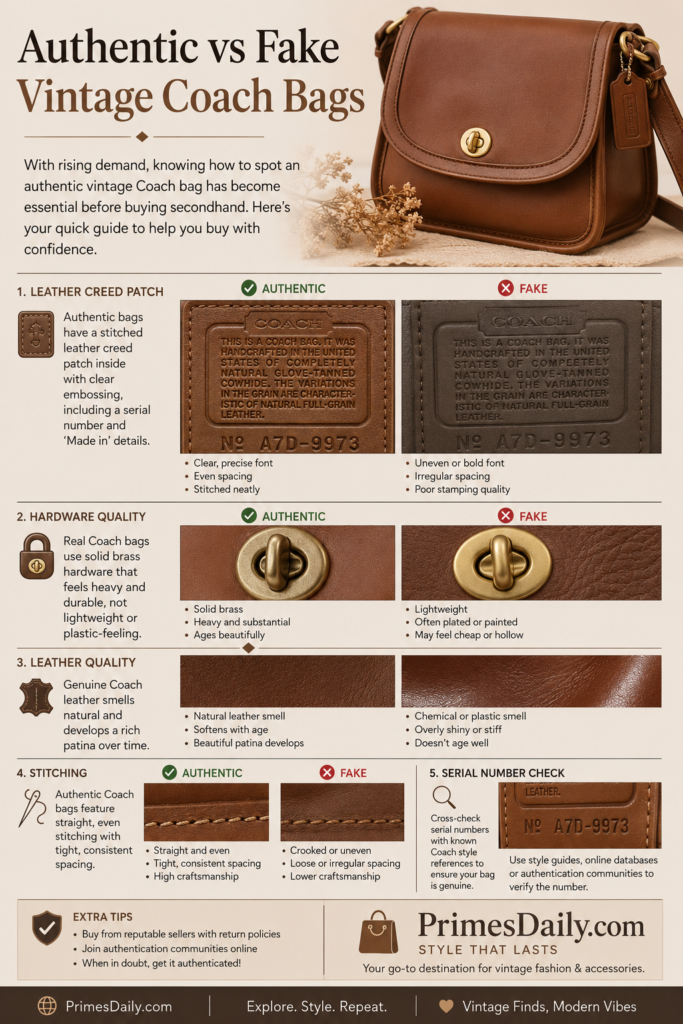
With rising demand, knowing how to spot an authentic vintage Coach bag has become essential before buying secondhand. Genuine pieces feature a leather creed patch stamped inside, usually near the lining, listing a serial number along with “Made in” details such as New York City or, in later years, other manufacturing locations. The font, spacing, and stitching around this patch tend to be precise and consistent, while counterfeit versions often show uneven lettering or low-quality stamping.
Hardware is another reliable indicator. Real Coach handbags typically use solid brass turnlocks that feel heavy and substantial, not lightweight or plastic-feeling. The leather itself should smell natural and develop a soft patina over time, rather than appearing overly shiny or synthetic.
Buyers should also cross-check serial numbers against known Coach style references and inspect stitching quality closely. Joining authentication communities or using reputable resellers can further reduce the risk of purchasing a fake when shopping online.
Popular Vintage Coach Bags Styles
Over the decades, certain styles have become especially recognizable among collectors searching for classic Coach handbags. The Soho remains one of the most popular choices, known for its slouchy silhouette and versatility across casual and dressy outfits. The Station bag, a structured crossbody style, is another favorite for its compact size and timeless turnlock closure, making it a practical everyday option.
The Ergo collection stands out for its soft, rounded shape and comfortable shoulder fit, while the Willis bag attracts collectors with its smaller, top-handle design that works well for restoration projects. Baguette-style bags are also widely sought after for their sleek, narrow profile and easy styling.
Beyond these, totes and Hampton-style handbags offer more spacious options for buyers who want function alongside vintage charm. Each style reflects a different era of Coach’s design evolution, giving shoppers plenty of variety when building a personal vintage collection.
Vintage Coach Baguette Shoulder Bag
The Vintage Coach Baguette Shoulder Bag is one of the most distinctive silhouettes from the brand’s early 2000s lineup, recognized by its narrow, rectangular shape and compact size. Designed to sit comfortably under the arm or across the body, this style was inspired by the broader baguette bag trend that became popular across fashion during that period. Coach’s interpretation kept the design practical, using sturdy leather and simple brass hardware rather than excessive embellishment.
Models like the 8K01 and 8K09 East West versions remain especially popular among collectors today, often praised for their structured shape and everyday usability. The compact size makes it ideal for buyers who prefer minimal, functional accessories over larger totes.
Because of its smaller surface area, this style typically shows less wear over time, making well-preserved pieces easier to find. It’s a great entry point for anyone starting a vintage Coach collection.
For the latest, updated, and unique information, visit Veneers Cost.
Vintage Coach Chelsea Turnlock Shoulder Bag
The Vintage Coach Chelsea Turnlock Shoulder Bag is a classic example of the brand’s signature minimalist design, built around a sturdy front turnlock closure and clean, structured lines. This style, often identified by reference numbers like 10983, typically features smooth leather construction paired with a comfortable shoulder strap, making it suitable for daily use rather than just occasional wear. Its simple silhouette has helped it remain relevant across different fashion trends over the years.
Collectors appreciate this bag for its balance of practicality and timeless style, as it works equally well for casual outings or more polished looks. The brass turnlock hardware not only adds a functional closure but also reflects the era when Coach prioritized durable, no-fuss design choices.
Because of its everyday usability, the Chelsea Turnlock often shows visible wear, so buyers should inspect the leather and hardware closely before purchasing. Well-kept examples remain a strong addition to any vintage collection.
Vintage Coach Soho Collection Overview
The Vintage Coach Soho Collection is one of the brand’s most recognizable lineups, known for its relaxed, slouchy silhouette and soft leather construction. Unlike the structured bags from Coach’s earlier decades, the Soho style introduced a more casual, lived-in look that quickly became popular through the late 1990s and early 2000s. This shift reflected changing fashion preferences at the time, moving toward comfort without sacrificing quality craftsmanship.
Within this collection, buyers will find variations like the Soho Tote and Soho Shoulder Bag, both available in classic Signature canvas as well as solid leather options. The Signature print, featuring the brand’s interlocking “C” pattern, became especially associated with this era and remains highly searched among collectors today.
Because of its widespread popularity, Soho bags are relatively easy to find secondhand compared to rarer styles. This makes the collection a practical starting point for anyone new to collecting vintage Coach handbags.
Vintage Coach Tote and Hampton Collection
The Vintage Coach Tote and Hampton Collection caters to buyers who prefer more spacious, functional handbags without compromising on classic design. Tote styles from this era, such as the Penelope and F13065 Hamptons Tote, feature roomy interiors ideal for everyday essentials, work items, or travel needs. Built with the same durable leather and brass hardware found across other vintage Coach lines, these bags were designed to handle frequent use while maintaining a clean, structured shape.
The Hampton name specifically refers to a series of totes and carryalls known for their boxy silhouette and reinforced handles, making them a practical choice for buyers who prioritize function over compact styling. Many examples also include a turnlock closure for added security.
Because of their larger size, these bags often show wear around the base and handles, so checking structural integrity is important before buying. Well-maintained totes remain a versatile, long-lasting option for daily use.
Serial Numbers and Coach Codes Explained
One of the most reliable ways to authenticate and date a vintage Coach bag is by examining its serial number, usually found on a leather creed patch stitched inside the lining. Older bags typically display a simple format listing “Made in New York City” or “Made in United States,” followed by a style or model number such as 9326 or 11237. As manufacturing expanded in later decades, the format shifted to include letter prefixes alongside numeric codes, reflecting different production years and locations.
These codes are useful for identifying specific styles, confirming approximate age, and cross-referencing against known Coach archives or collector databases online. Stitching quality and font consistency around the creed patch also matter, since uneven or blurry stamping is a common red flag for counterfeit pieces.
For collectors building a serious vintage collection, learning to read these codes is essential. It not only helps confirm authenticity but also adds historical context to each piece being purchased.
Hardware and Hardware Quality
Hardware plays a major role in identifying genuine vintage Coach bags, since the brand has historically relied on solid brass fittings rather than lightweight metal alternatives. Turnlocks, zipper pulls, and buckles from this era typically feel heavy, with a smooth, polished finish that holds up well even after decades of use. Many original pieces still function smoothly today, which speaks to the quality control standards Coach maintained during its early production years.
Over time, well-cared-for brass hardware develops a natural patina, giving each bag a warm, aged tone rather than a dull or corroded appearance. This aging process is often seen as a desirable trait among collectors, adding character instead of detracting from value.
When evaluating a potential purchase, buyers should check for loose attachments, rust spots, or hardware that feels unusually light, as these can signal either heavy wear or a non-authentic piece. Sturdy, well-finished hardware remains one of the clearest signs of lasting quality.
Where to Find Vintage Coach Bags Online
Finding genuine vintage Coach bags online has become easier thanks to a growing number of resale platforms and dedicated communities. Sites like eBay and Poshmark remain popular starting points, offering a wide range of styles, prices, and conditions, though buyers should always check seller ratings and photos carefully before purchasing. Specialty resale shops that focus specifically on preloved designer pieces also tend to offer better-curated, pre-authenticated selections.
Beyond marketplaces, social platforms have become valuable resources too. Facebook groups dedicated to vintage Coach buying and authentication allow members to verify pieces before committing to a purchase, reducing the risk of counterfeit items. Online forums and collector communities often share trusted seller recommendations as well.
For buyers wanting more confidence in authenticity, smaller vintage-focused online stores that specialize in Coach handbags can be a safer bet, even if prices run slightly higher than general marketplaces.
Vintage Coach Bags Restoration and Care Tips
Restoring a vintage Coach bag starts with a gentle cleaning process rather than aggressive scrubbing, since the leather can be sensitive after years of wear. A soft, slightly damp cloth is usually enough to remove surface dirt, followed by a leather conditioner suited for glove-tanned hide to restore softness and prevent cracking. Avoid harsh chemicals or household cleaners, as these can strip natural oils and damage the leather’s finish permanently.
For deeper stains or discoloration, many collectors recommend testing any product on a small, hidden area first before applying it broadly. Hardware can typically be cleaned separately using a soft brush, helping brass turnlocks regain their shine without affecting the surrounding leather.
Storing these bags properly also extends their lifespan, ideally in a cool, dry place away from direct sunlight, stuffed lightly to maintain shape. With consistent care, a well-restored vintage Coach piece can remain functional and attractive for many more years of use.
Condition Grading for Vintage Coach Bags
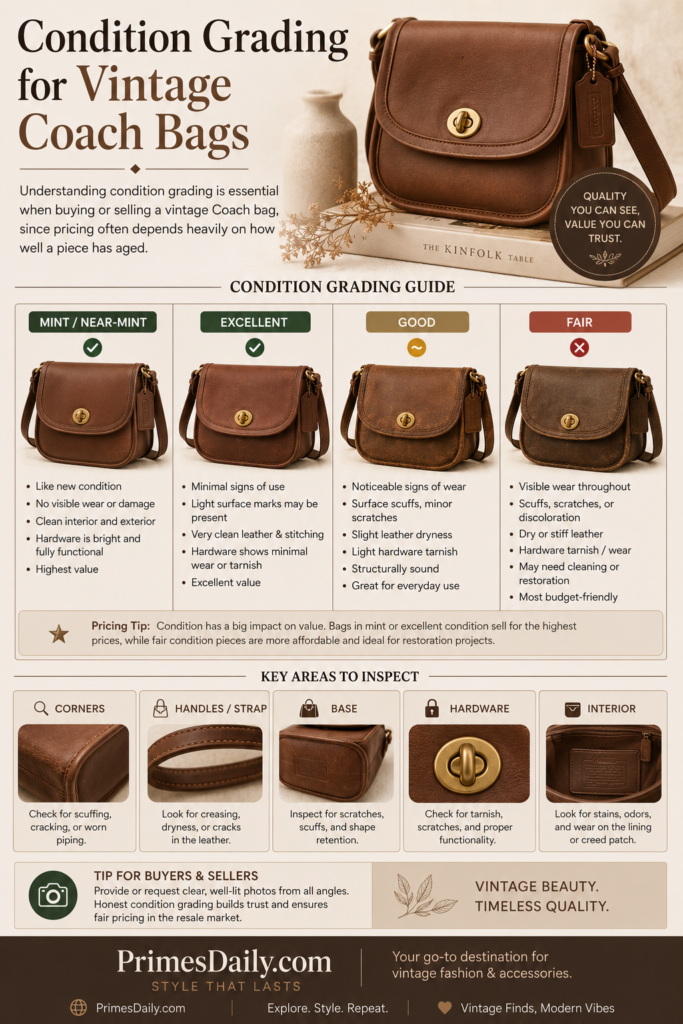
Understanding condition grading is essential when buying or selling a vintage Coach bag, since pricing often depends heavily on how well a piece has aged. Most sellers use simple categories such as mint, excellent, good, or fair to describe overall wear. A mint or near-mint bag typically shows little to no visible damage, with clean leather, intact stitching, and fully functional hardware, making it the most valuable within its style.
Bags graded as good or fair condition may show signs like surface scuffing, minor leather dryness, or light hardware tarnish, but remain structurally sound. These pieces are often more budget-friendly and popular among buyers interested in restoration projects rather than display-ready items.
When evaluating condition, buyers should closely inspect corners, handles, and the base of the bag, since these areas typically experience the most wear. Clear photos and honest grading help ensure a fair price for both buyers and sellers in the resale market.
Investment Value of Vintage Coach Bags
The investment value of vintage Coach bags has grown steadily as demand for sustainable, well-made fashion continues to rise. Unlike many modern accessories that lose value quickly, certain classic Coach styles have shown consistent resale interest, particularly rare pieces tied to specific eras like the Bonnie Cashin designs or early glove-tanned leather bags. Limited production numbers and discontinued styles often contribute to higher long-term value among collectors.
Condition plays a major role in determining resale potential, with well-preserved or professionally restored pieces typically commanding stronger prices than heavily worn examples. Bags featuring rare colorways, unique hardware, or early manufacturing codes also tend to attract more serious collectors willing to pay a premium.
While not every vintage Coach handbag guarantees significant returns, the combination of durable materials, brand heritage, and growing secondhand fashion interest makes thoughtful buying choices a reasonably sound long-term investment compared to fast-fashion alternatives.
Vintage Coach Bags vs Modern Coach Comparison
Comparing vintage Coach bags to modern Coach releases highlights a clear shift in materials and design philosophy over the decades. Older pieces were typically crafted from thick, glove-tanned cowhide leather with simple brass hardware, prioritizing durability and minimalism over trend-driven details. Modern Coach handbags, by contrast, often incorporate coated canvas, synthetic linings, and more elaborate branding, reflecting broader changes in mass-market fashion production.
Construction quality also differs noticeably between the two eras. Vintage pieces tend to feel heavier and more substantial, built to withstand daily use for decades, while many newer bags prioritize lighter materials and faster production cycles. This difference is one reason collectors often seek out older models specifically for long-term durability.
That said, modern Coach bags do offer updated styling, broader color options, and contemporary silhouettes suited to current trends. Ultimately, the choice between vintage and modern often comes down to whether buyers prioritize heritage craftsmanship or present-day design convenience.
Rare Vintage Coach Bags and Collectibles
Among vintage Coach collectors, certain pieces stand out as especially rare and highly sought-after due to limited production or unique design details. Early Bonnie Cashin-era bags, created during the 1960s and 70s, are particularly valued for their historical significance as some of the first designs to introduce brass turnlocks and minimalist silhouettes. Discontinued styles like the Station bag or specific colorways such as deep red or emerald green also attract serious attention in resale markets.
Limited or unusual hardware variations, double creed patches, and uncommon manufacturing codes can further increase a bag’s collectible status, often signaling either early production runs or rare manufacturing anomalies. These details typically require careful research or expert verification before purchase.
For collectors building a meaningful vintage collection, rare finds offer more than just aesthetic appeal. They represent specific moments in Coach’s design history, making them valuable additions for those who appreciate authenticity and craftsmanship over mass-produced alternatives.
FAQs
What years are considered vintage Coach bags?
Generally, pieces made from the 1960s through the early 2000s, before Coach shifted to mass production.
How can I tell if a vintage Coach bag is authentic?
Check the leather creed patch, serial number, brass hardware weight, and stitching quality.
Are vintage Coach bags a good investment?
Rare, well-preserved styles often hold or increase in value over time.
Where is the best place to buy vintage Coach bags?
Trusted resale platforms, authentication-focused Facebook groups, and specialty vintage shops.
Can vintage Coach bags be restored?
Yes, with proper leather conditioning and gentle cleaning, most pieces can be brought back to great condition.
Conclusion
Vintage Coach bags remain a standout choice for anyone drawn to durable craftsmanship, timeless design, and genuine fashion history. From Bonnie Cashin’s early glove-tanned leather creations to popular styles like the Soho, Station bag, and Baguette, each piece reflects a distinct era of Coach’s design evolution. Their solid brass hardware and quality leather construction continue to outperform many modern, mass-produced alternatives in long-term durability.
Whether buyers are searching for an affordable entry into heritage fashion or hunting for rare collectible pieces, vintage Coach handbags offer something for nearly every interest and budget. With proper authentication, careful condition checks, and thoughtful restoration when needed, these bags can remain functional and stylish for many more years.
Ultimately, investing time in understanding authenticity, hardware quality, and condition grading helps buyers make confident, informed decisions within this growing secondhand market.
For the latest, updated, and unique information, visit Mini Jumbotron.