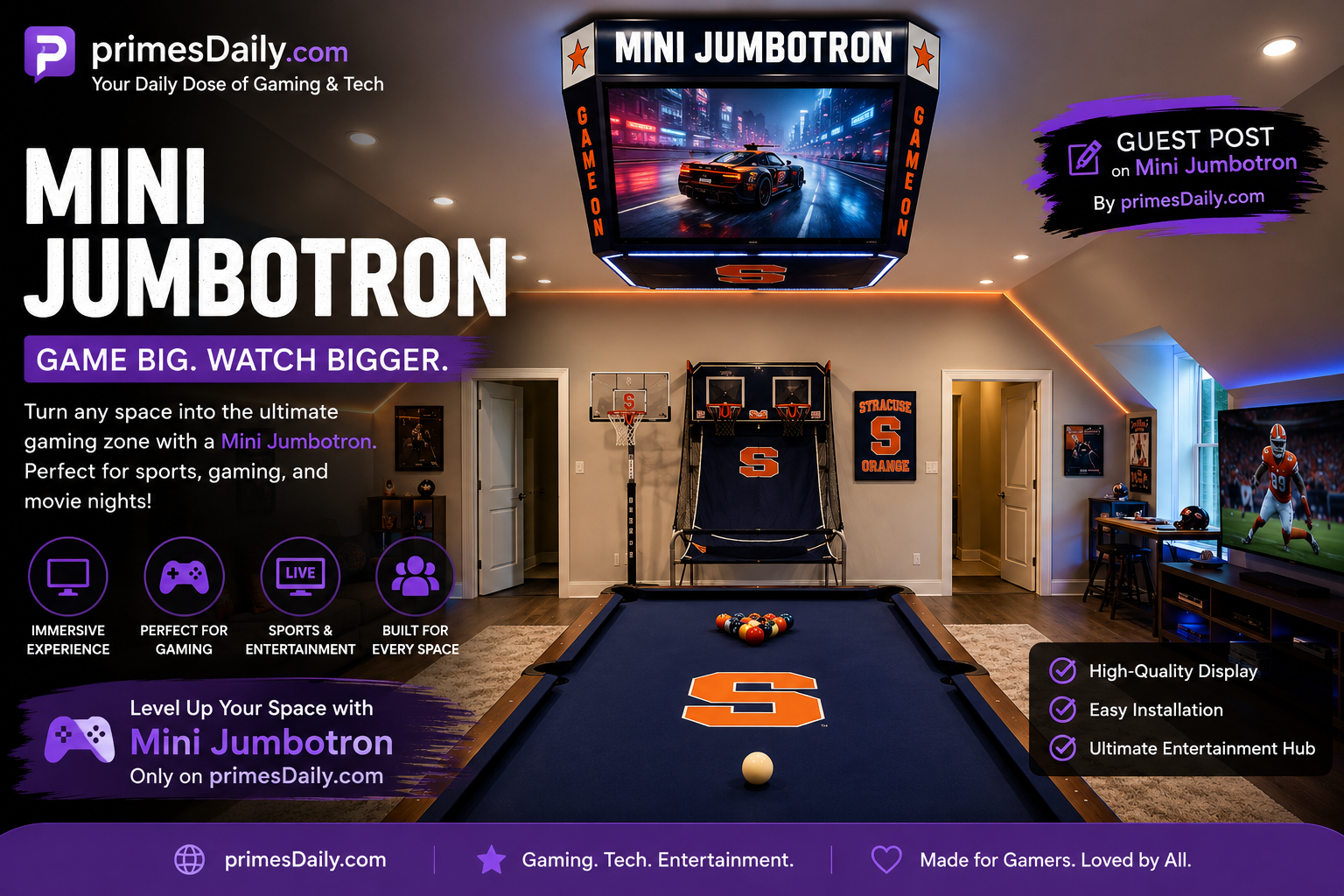
Have you ever watched a sports game at a stadium and felt amazed by those massive center-hung scoreboards? That electrifying experience doesn’t have to stay in the arena. Today, homeowners, bar owners, and business operators are bringing that same stadium magic into their spaces through an arena-style ceiling display—a scaled-down version designed specifically for smaller environments.
Unlike traditional flat-screen TVs mounted on walls, this compact system creates a focal point that draws attention from every angle in the room. Whether you’re setting up the ultimate man cave, enhancing your sports bar, or upgrading your home theater, understanding what these systems offer will help you make an informed decision.
This comprehensive guide covers everything you need to know about mini jumbotrons in 2026—from pricing and installation to technology and real-world applications. Let’s dive in.
What is a Mini Jumbotron?
What exactly is a mini jumbotron, and how does it differ from a regular TV?
A mini jumbotron is a compact, arena-style LED or multi-screen display system that replicates the appearance and functionality of the giant scoreboards found in professional sports stadiums. Instead of a single flat television on your wall, this display typically features two to four screens arranged around a central frame, often hung from the ceiling or mounted on a sturdy structure.
The key difference lies in the experience. While a standard TV forces everyone to cluster around one angle, this system creates a 360-degree focal point. This means viewers from any direction in the room can comfortably see content without competing for the best seat.
Are these systems just for sports?
Not at all. While sports are the most popular use case, these displays work beautifully for movies, concerts, video games, corporate events, and even digital art installations. The multi-sided capability makes them ideal for any space where you want to maximize viewer engagement and create an immersive atmosphere.
These systems typically use either dedicated LED panels or commercial-grade smart TVs mounted within a decorative frame. The setup includes brackets, lighting, cable management, and sometimes a media player or control system to manage content across all faces simultaneously.
The aesthetic appeal is undeniable—a properly designed display becomes both a functional display and a statement piece that transforms any room’s character.
Mini Jumbotron Sizes & Specifications for Every Space
What size should I choose for my space?
Size depends on three critical factors: ceiling height, viewing distance, and room dimensions. Unlike buying a single TV, selecting these displays requires thinking about how the entire installation fits within your architecture.
These systems typically feature individual screen diagonals ranging from 24 inches to 65 inches per face. The most popular configurations are:
Small Displays (24″ to 32″): These compact units work perfectly for spaces under 200 square feet, such as above pool tables, behind bar counters, or in cozy man caves. They’re lightweight, affordable, and create impact without overwhelming the room.
Medium Displays (32″ to 43″): The sweet spot for most residential and small commercial installations. Medium-sized units suit rooms between 200 and 400 square feet and provide excellent visibility for viewing distances of 2 to 4 meters.
Large Displays (43″ to 65″): Designed for spaces over 400 square feet, including larger basements, commercial venues, restaurants, and small gyms. These installations demand higher ceilings and stronger mounting infrastructure.
How do I calculate the perfect size for my room?
A practical rule: viewers should sit at least 1.5 to 2 times the diagonal measurement away from each screen face. So if you choose 43-inch displays, people should ideally sit 6 to 8 feet away. This distance prevents neck strain and ensures comfortable viewing throughout the room.
Measure your ceiling height and the room’s primary seating area. Most installations require 8 to 10 feet of clearance from floor to the bottom of the display, ensuring nobody accidentally bumps their head and allowing proper heat dissipation.
Mini Jumbotron Display Technology Explained
What types of display technology power these systems?
Today’s arena-style displays use one of two primary technologies: LED panels or consumer/commercial smart TVs integrated into a cohesive frame.
LED Panel Technology: Professional-grade LED displays offer superior brightness, making them ideal for venues with ambient lighting or outdoor installations. LED panels deliver 2000+ nits of brightness, support 24/7 operation, and provide seamless displays with no visible gaps between modules. The pixel pitch (distance between pixels) determines image clarity—smaller pitches like P2.5 or P3 deliver crisp details ideal for text and graphics.
Smart TV Integration: More affordable and accessible, this approach uses commercial-grade displays (typically 43″ to 65″) mounted in a custom frame. Smart TVs offer excellent color accuracy, consume less power, and are easier to repair or upgrade. Most support 4K resolution and include built-in streaming apps.
What resolution is best for these displays?
For systems using Smart TVs, 4K (3840×2160) is now standard and affordable. For LED-based setups, resolution depends on viewing distance and content type. Sports content looks sharp at 1080p when viewed from 6+ feet away, while detailed graphics benefit from higher pixel densities.
How bright should these displays be?
Indoor venues typically require 800 to 1200 nits of brightness—enough to maintain color and contrast under normal room lighting. Outdoor or brightly lit commercial spaces need 2000+ nits. If your display feels washed out or hard to see, brightness is usually the culprit.
What about refresh rates and response time?
Modern displays use 60Hz refresh rates as standard, sufficient for sports and general content. Gaming enthusiasts may prefer 120Hz displays for ultra-smooth motion, though this adds cost. Response time (measured in milliseconds) matters less for stationary displays but becomes important if you’re showing fast-action content.
How to Choose the Perfect Mini Jumbotron for Your Needs
Where will I use this system—home, business, or both?
This determines nearly every other specification. Residential installations prioritize aesthetics and integration with home decor. They typically feature customizable graphic frames, dimmable accent lighting, and content systems that accept standard HDMI inputs from gaming consoles, streaming devices, or cable boxes.
Commercial setups emphasize durability, brightness, and content flexibility. They often include digital signage players, scheduled content management, social media integration, and professional installation services.
What viewing experience do I want to create?
Game-day watching demands different specs than displaying retail advertisements or running a workout timer system. Define your primary use case first—this guides every other decision from brightness to content management.
How much maintenance am I willing to do?
Smart TV-based installations require occasional screen cleaning, power cycling, and software updates similar to any TV. LED-based systems need professional maintenance every 1 to 2 years, including LED replacement and calibration. Factor this ongoing commitment into your decision.
Should I prioritize customization or standardization?
Custom systems with bespoke graphics, team colors, and branded frames cost more but create unique spaces that stand out. Standard off-the-shelf packages cost less and install faster but offer limited personalization.
Mini Jumbotron Price Guide: Cost Breakdown 2026
What’s the actual cost in 2026?
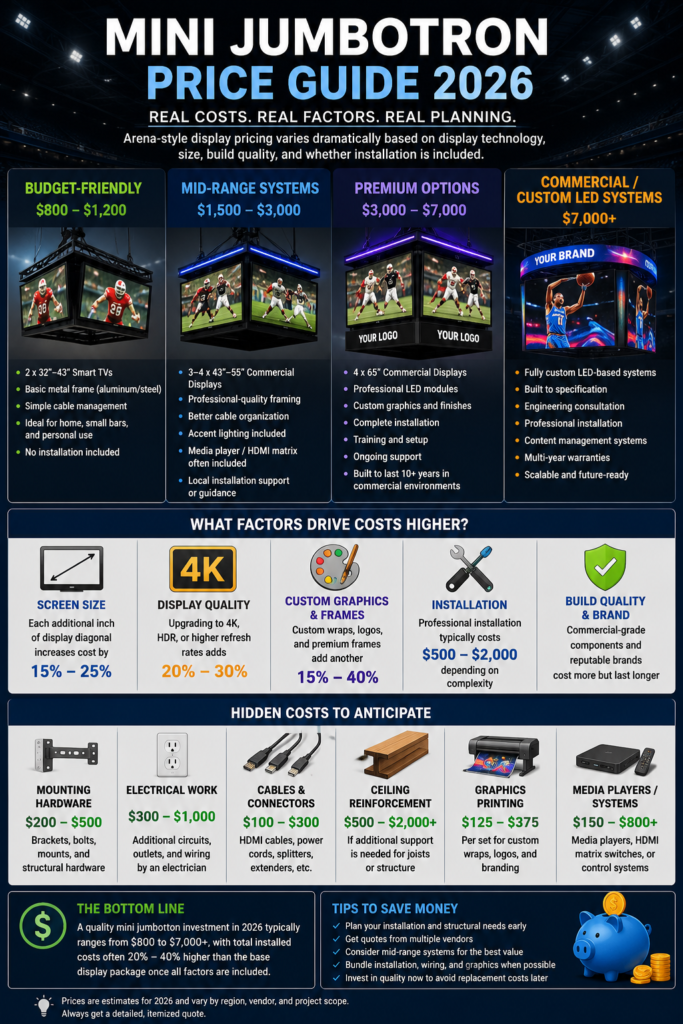
Arena-style display pricing varies dramatically based on display technology, size, build quality, and whether installation is included. Understanding the cost spectrum helps you budget appropriately.
Budget-Friendly Options ($800 to $1,200): These entry-level systems typically feature two 32″ to 43″ Smart TVs mounted in a basic metal frame. They work for personal use, home theaters, and small bar setups. The frame is usually aluminum or steel with simple cable management. No installation service is typically included—you handle mounting and setup.
Mid-Range Systems ($1,500 to $3,000): This category represents the “sweet spot” for most buyers. You get three or four 43″ to 55″ commercial-grade displays, professional-quality framing, better cable organization, accent lighting included, and often a media player or HDMI matrix system. Many packages include local installation support or guidance.
Premium Options ($3,000 to $7,000): High-end systems feature four 65″ displays, professional LED modules, custom graphics, complete installation, training, and ongoing support. These are built to last 10+ years in demanding commercial environments.
Commercial/Custom LED Systems ($7,000+): Fully custom LED-based installations built to specification. These include engineering consultation, professional installation, content management systems, and multi-year warranties.
What factors drive costs higher?
Screen size significantly impacts pricing—each additional inch of display diagonal increases cost by 15 to 25%. Display quality (4K vs 1080p, HDR support) adds 20 to 30%. Custom graphics and frames add another 15 to 40%. Professional installation typically costs $500 to $2,000 depending on complexity.
Are there hidden costs I should anticipate?
Yes. Plan for mounting hardware ($200 to $500), electrical work ($300 to $1,000), cable and connectors ($100 to $300), and potentially ceiling reinforcement ($500 to $2,000 if your joists need support). Graphics printing costs $125 to $375 per set.
Best Mini Jumbotron Brands & Manufacturers
Which brands are actually worth buying?
Numerous manufacturers now offer arena-style display solutions, ranging from specialized companies to electronics giants. Here are the most trusted brands in 2026:
TronVision Enterprises: Known for lightweight, plug-and-play systems that include Smart TVs, free shipping, and nationwide installation networks. Popular for home entertainment and small commercial spaces.
Mini Jumbotron Company: The pioneer in this category, offering customizable designs with backlit graphic support, DIY plans, and free design assistance. Strong reputation for customer service.
Royal Display: A professional LED manufacturer offering both TV-based and premium LED-module systems. Excellent for businesses requiring higher brightness and durability.
Daktronics: An established leader in scoreboard technology with offerings for small venues and facilities.
Samsung and LG Professional: These electronics giants offer high-end commercial displays that can be configured into these systems through resellers.
Unilumin and Absen: Chinese LED manufacturers with strong reputations for reliability and competitive pricing on professional-grade systems.
What should I look for when comparing brands?
Verify warranty coverage (electronics and frame), check customer reviews from actual installations, confirm local support availability, and ask for references from similar projects. Brands offering free design consultation and installation guidance are typically more reliable than those just selling hardware.
For the latest, updated, and unique information, visit Elektra Mexico.
Mini Jumbotron for Man Caves & Home Entertainment
Why are these systems becoming the standard for luxury man caves?
A well-designed installation transforms a basement or game room from “another TV” into an immersive entertainment destination. The ceiling-mounted central display creates natural gathering points and makes everyone feel like they’re at a live event, not just watching in someone’s garage.
What specifications matter most for home use?
For residential installations, customization and aesthetics matter as much as performance. The frame should match your decor—whether that’s team colors, wood paneling, or sleek modern design. Accent lighting (typically LEDs in corners or behind the display) adds ambiance without increasing heat.
Sound integration is often overlooked but critical. Poor audio makes the experience feel incomplete. Many installations include surround-sound speakers mounted around the frame, creating cinema-like immersion.
How do I integrate this system with existing home entertainment?
Most modern displays accept standard HDMI inputs. You can connect gaming consoles, cable/satellite boxes, streaming devices, or media players. Some systems include HDMI splitters or matrix switches allowing different content on each face—perfect for displaying the main game on two faces and scores or social media on others.
What about content options—can I stream sports live?
Absolutely. Connect any streaming device (Apple TV, Roku, Fire Stick, or built-in Smart TV apps) and stream from ESPN+, NFL GamePass, Amazon Prime Video, or other sports platforms. Most modern smart displays already include these apps pre-installed.
Mini Jumbotron for Business & Commercial Use
How do these systems transform commercial spaces?
For restaurants, bars, gyms, and small venues, an arena-style display becomes the room’s visual anchor. It keeps customers engaged, encourages longer visits, supports promotions, and differentiates your space from competitors.
Can this system help my business make money?
Absolutely. Sports bars with these installations report longer customer dwell times and higher per-visit spending. The immersive atmosphere creates a premium experience worth paying premium prices for. Fitness facilities use displays to show workout stats, leaderboards, and motivational content. Restaurants loop promotional videos and menu boards.
What content management system works best for commercial installations?
Professional setups typically include digital signage players (small box devices) that connect to your network. These devices let you schedule content, loop videos, display live data feeds, integrate social media, and update everything remotely from your computer or phone.
How does this system help with social media and marketing?
The distinctive look of a ceiling-hung display is incredibly photogenic. Customers naturally take pictures and videos, sharing them on social media. This free publicity is worth thousands in traditional advertising.
Indoor vs Outdoor Mini Jumbotron Installation
Can I install this system outdoors?
Not all systems work outdoors. Standard Smart TV-based setups will fail in rain, extreme heat, or direct sunlight. However, professional LED-based systems are specifically designed for outdoor use.
What’s different about outdoor installations?
Outdoor LED displays use ruggedized enclosures with IP65 or higher ratings (meaning complete dust protection and water resistance). They include weatherproof mounting hardware, stainless steel frames, and drainage systems. Brightness requirements are also much higher—outdoor systems typically deliver 3000+ nits to remain visible in daylight.
Where can I use outdoor displays?
Parking lots, patios, outdoor event spaces, sports facility entrances, and parking structure suites all benefit from these installations. Breweries, food trucks, and outdoor venues use them for menus, entertainment, and information displays.
What’s the cost difference between indoor and outdoor?
Outdoor systems cost 40 to 60 percent more than comparable indoor installations due to weatherproofing and higher brightness requirements. However, they’re built to last 10+ years even in harsh climates.
How do temperature and weather affect these systems?
Standard displays operate safely between 32°F and 104°F. Outside this range, components fail. LED-based outdoor systems include thermal management—cooling systems in hot climates, heating elements in cold regions, and moisture barriers preventing corrosion.
How to Install a Mini Jumbotron: Step-by-Step Guide
Can I install this system myself, or do I need professionals?
Light TV-based systems under 40 pounds can be DIY projects if you’re handy. However, proper structural assessment and electrical work should always involve professionals. Heavy LED-based systems absolutely require professional installation.
What’s involved in a typical setup?
Step 1 – Site Assessment: A technician evaluates your ceiling structure, electrical capacity, cable routing, and viewing angles. They confirm mounting locations and identify any structural reinforcement needed.
Step 2 – Structural Preparation: If your ceiling joists can’t support the load, additional bracing gets installed. For professional installations, this involves 2×6 or 2×8 lumber depending on total weight.
Step 3 – Electrical Setup: A licensed electrician runs dedicated circuits for the display, media player, and lighting. Most installations require 20-amp circuits separate from your main audio/video systems.
Step 4 – Mounting Installation: Heavy-duty ceiling mounts rated for 2 to 3 times the total weight get installed. Each mounting point gets verified with hardware testing before proceeding.
Step 5 – Display Assembly: Displays are unboxed, tested, and secured within the frame. Cable management channels hide all wiring.
Step 6 – Lighting Installation: Accent lighting around the frame gets wired and secured.
Step 7 – System Testing: Every display gets powered on, color calibrated, and verified for proper brightness and contrast.
Step 8 – Content Setup: Media players get configured, streaming apps get installed, HDMI routing gets programmed, and the control interface gets tested.
What’s the typical installation timeline?
Standard residential installations take 6 to 12 hours for skilled technicians. Complex commercial builds with custom graphics and content integration may take 2 to 3 days.
How much does professional installation cost?
Expect $800 to $2,000 for residential installations, depending on complexity. Commercial installations run $2,000 to $5,000+ for structural work, electrical upgrades, and content programming.
Mini Jumbotron Setup & Configuration Tips
How do I set up content to display across all screen faces?
Most systems support mirroring (same image on all faces) or independent displays (different content per face). For mirroring, use an HDMI splitter ($20 to $50) that sends one source to multiple displays. For independent content, use an HDMI matrix switch ($200 to $800) allowing different inputs to each screen.
What if I want different content on different faces?
This requires either an HDMI matrix or professional signage software. For example, display the main game on two faces, scores on another face, and social media feeds on the fourth. This flexibility is what makes these systems superior to traditional single TVs.
Can I control this system remotely?
Yes. Smart displays include remote controls. For more sophisticated control, add a media player with network connectivity—you can then schedule content, adjust settings, and monitor the system from your smartphone or computer.
What audio options work with these installations?
Most setups include separate surround sound speakers mounted around the frame. Connect speakers to an AV receiver, which can process audio from any connected device. Some high-end systems include integrated speakers, but external speakers typically deliver superior sound.
How do I manage cables and avoid a messy look?
Professional installations use cable channels (plastic conduit) that run behind or alongside the frame, hiding all connections from view. Power cables, HDMI lines, and speaker wires get organized with labeling and tie management for easy troubleshooting later.
Benefits of Upgrading to a Mini Jumbotron
What tangible benefits does this system provide?
The advantages extend far beyond simply having a bigger screen. A well-executed installation delivers measurable improvements in user experience, property value, and business performance.
Immersive Atmosphere: Ceiling-mounted displays with multiple faces create environmental immersion. Viewers feel like they’re part of the action rather than passive spectators. This transforms game nights from casual viewing into memorable events.
Enhanced Viewing Angles: Unlike wall-mounted TVs that favor front-facing seats, multi-sided displays ensure excellent visibility from anywhere in the room. Nobody gets stuck with a poor view.
Branding and Customization: Graphic wraps, team colors, and custom frames transform displays into branded assets. Your space becomes uniquely yours.
Space Efficiency: By utilizing overhead space, these systems preserve wall area for other purposes—shelving, decor, additional seating, or merchandise displays.
Increased Engagement: Studies from hospitality venues show these installations increase customer dwell time by 30 to 45 percent and boost spending. The visual focal point naturally draws people and keeps them engaged.
Flexible Content: Run live sports, promotional videos, menu boards, social media feeds, digital art, or presentations—all from a single system.
Long-Term Value: Quality installations last 10 to 15 years, making the per-year cost lower than constantly upgrading traditional TVs.
Mini Jumbotron Performance & Picture Quality
How does the picture quality compare to modern TVs?
Modern Smart TV-based installations use the same display panels as premium consumer televisions, so picture quality is comparable. LED-based professional systems can actually exceed TV quality in brightness and color accuracy.
What about image quality when displayed across multiple screens?
Quality depends on the synchronization system. Professional installations use processors that ensure all faces display perfectly synchronized content. Consumer-level systems may show slight delays or timing mismatches between displays, though this is rarely noticeable during normal viewing.
Does aspect ratio matter for multi-screen displays?
Yes, but it’s less of an issue than you might think. Most content (16:9 sports broadcasts, movies, streaming services) works perfectly on square or rectangular screen configurations. Custom graphics can be designed specifically for your system’s layout.
What’s the difference between 1080p and 4K?
At typical viewing distances of 6 to 8 feet, the difference between 1080p and 4K is subtle. However, 4K displays future-proof your system and deliver noticeably crisper images for close-up viewing (within 4 feet). For most installations, 1080p is sufficient; 4K is a nice-to-have.
How do I prevent image degradation over time?
Regular cleaning (soft cloth, avoid harsh chemicals), proper ventilation around displays, and stable power supply protect image quality. LED-based systems benefit from occasional professional calibration maintaining color accuracy.
Mini Jumbotron Maintenance & Care Guide
What maintenance do these systems require?
Smart TV-based installations need minimal maintenance—just occasional screen cleaning and standard TV care. LED-based systems require more attention to keep performing optimally.
How often should I clean the displays?
Clean display faces monthly using a soft microfiber cloth slightly dampened with distilled water. Never use harsh chemicals or abrasive cloths. For surrounding frames and graphics, dust monthly with a soft brush.
What about long-term component replacement?
Quality LED systems last 50,000 to 100,000 hours (5 to 10 years of continuous operation). When nearing end-of-life, LED modules show gradual brightness reduction. Smart TV displays typically last 30,000 to 50,000 hours before needing replacement.
How do I troubleshoot common problems?
Blank screen? Check power connections and input source selection. Flickering? Verify video cables are secure and try different HDMI ports. Dead pixels? Contact the manufacturer—small numbers of dead pixels are typically covered under warranty.
What temperature and humidity conditions are ideal?
Keep ambient temperature between 50°F and 85°F for optimal performance. Humidity should remain between 20 and 80 percent. Extremely dry conditions increase static risk; excessive humidity promotes corrosion.
Common Mini Jumbotron Problems & Solutions
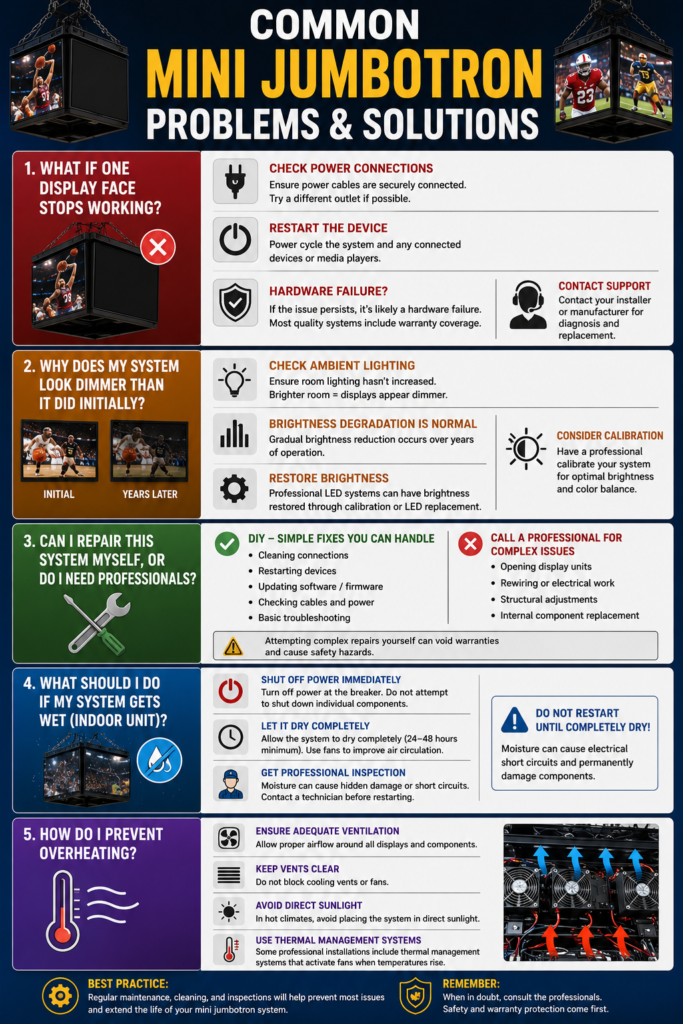
What if one display face stops working?
First, check power connections and restart the device. If the issue persists, it’s likely a hardware failure. Most quality systems include warranty coverage. Contact your installer or manufacturer for replacement.
Why does my system look dimmer than it did initially?
Gradual brightness reduction is normal over years of operation. First, ensure room ambient lighting hasn’t increased (brighter room = displays appear dimmer). If it’s the display itself, professional LED systems can have brightness restored through calibration or LED replacement.
Can I repair this system myself, or do I need professionals?
Simple fixes—cleaning connections, restarting devices, updating software—you can handle. Anything involving opening display units, rewiring, or structural adjustments should go to qualified technicians to avoid voiding warranties or causing safety issues.
What should I do if my system gets wet (indoor unit)?
Immediately shut off power at the breaker. Don’t attempt to restart until completely dry (24 to 48 hours). Moisture can cause electrical short circuits. If significant water exposure occurred, contact a technician for inspection before restarting.
How do I prevent overheating?
Ensure adequate ventilation around all displays and components. Don’t block cooling vents. In hot climates, avoid direct sunlight exposure. Some professional installations include thermal management systems activating fans when temperatures rise.
Mini Jumbotron Market Trends & Future Innovations
What’s happening with this technology in 2026?
The market is experiencing explosive growth driven by affordable LED technology, integration with smart home systems, and increasing customization options. Here are the major trends shaping the industry:
Smaller Pixels, Sharper Images: LED pixel pitches are shrinking from traditional P3 (3mm between pixels) to P1.5 or P2, matching the crispness of high-resolution displays. This makes these systems viable for close-distance viewing.
AI-Powered Content Management: Newer systems use artificial intelligence to auto-schedule content based on time of day, weather, local events, and viewer preferences. This removes manual scheduling burden.
Integration with Smart Home: Leading systems now integrate with voice assistants (Alexa, Google Home), allowing voice-controlled display switching, brightness adjustment, and content selection.
Lightweight LED Modules: Manufacturers are developing thinner, lighter LED panels reducing installation complexity and cost. Some new systems weigh under 30 pounds for four-screen configurations.
Energy Efficiency: Modern displays consume 30 to 40 percent less power than systems from just three years ago. This reduces operating costs and environmental impact.
Flexible and Curved Displays: Emerging technologies enable curved or non-rectangular configurations, opening possibilities for unusual spaces.
Why Mini Jumbotrons Are Growing in 2026
Why is demand accelerating?
Several converging factors explain the explosive growth in this category. LED costs have dropped 60 percent in five years, making professional-grade displays suddenly affordable for homeowners. Simultaneously, pandemic-era remote living inspired people to invest in home entertainment. The COVID era normalized large installations in home spaces.
Social media amplifies demand through viral videos showing stunning installations. Every viral video inspires viewers to consider their own setup, creating network effects where awareness drives adoption.
Streaming services and sports platforms have expanded dramatically. Previously, watching multiple games simultaneously was impossible. Now, with multi-face display capability, you can show the main game plus score updates, social media, or secondary games—something not possible with traditional TVs.
Professional installations have become more accessible. Five years ago, only arena-scale companies offered this service. Now, thousands of AV installers nationwide offer these solutions, making professional help affordable.
The “premiumization” of home entertainment is real. People invest significantly in their living spaces post-pandemic. These displays have shifted from novelty to expected luxury home feature in affluent households.
Real Customer Reviews: Mini Jumbotron Experiences
What do actual owners say?
Customer feedback reveals why these systems are becoming so popular. Real-world reviews consistently highlight emotional and practical benefits.
“This completely transformed our basement. Guests can’t believe what they’re seeing. The ceiling-mounted display makes everyone feel like they’re at the actual game. We get comments about it at every gathering.” – Mark, homeowner in Michigan.
“We installed this system in our restaurant three months ago. Customer dwell time increased by 40 percent. People stay longer, order more drinks, and recommend us to friends who want to experience our setup. It was the best business investment we’ve made.” – Lisa, restaurant owner in Texas.
“Setup was way easier than I expected. The professional team had it installed and calibrated in one day. Picture quality is stunning. Every football game feels like an event now.” – James, tech enthusiast in California.
“My kids love it for gaming. The multiple screens let us display the main game plus stats and group chat. Gaming sessions have become the social event of our friend group.” – Rachel, parent and gamer.
“The customization options were incredible. Our company logo and colors are integrated into the frame. Clients are always impressed when they see it. It’s become a talking point in every meeting.” – David, corporate event planner.
“Honestly, the best part is the sound when paired with proper speakers. Combined with the visual impact, it’s a completely immersive experience unlike anything a regular TV can provide.” – Kevin, home theater enthusiast.
Mini Jumbotron Vs Full-Size Displays: Comparison
How do these systems compare to traditional full-size displays?
Full-size jumbotrons are massive displays common in professional sports stadiums, outdoor plazas, and convention centers. They’re often 50+ feet wide and built from thousands of LED modules.
Size and Scale: Full-size displays dominate entire stadium walls. These systems are designed for rooms where viewers sit relatively close. A setup with 2 to 4 screens (typically 32″ to 65″ each) creates impact without overwhelming home spaces.
Cost: A small full-size stadium display might cost $100,000+. Quality systems range from $1,500 to $7,000, making them accessible to homeowners and small businesses.
Brightness Requirements: Full-size outdoor displays need extreme brightness (5000+ nits) to remain visible in daylight. Home systems need only 800 to 1200 nits, reducing cost and power consumption.
Installation: Full-size systems require structural engineering, cranes, and extensive infrastructure. These systems mount on standard ceiling structures using conventional mounting hardware.
Content: Full-size displays typically show game scores, replays, and sponsor advertising. Arena-style systems support diverse content—sports, movies, video games, presentations, social media, digital art.
Maintenance: Full-size systems require 24/7 monitoring, specialized technicians, and substantial upkeep. These systems can be maintained by any competent AV professional or even tech-savvy homeowners.
Budget-Friendly Mini Jumbotron Options
Can I get a quality system without spending thousands?
Absolutely. Smart shopping can yield excellent systems under $2,000.
DIY TV-Based Approach: Source four 43″ 4K Smart TVs ($300 to $400 each = $1,200 to $1,600 total), then build or have a welder construct a frame ($300 to $600), add basic mounting hardware ($150 to $200), and handle installation yourself if you’re handy. Total: $1,650 to $2,400 for a four-screen system.
Off-Shelf Packages: Several manufacturers offer pre-configured systems including frame, displays, lighting, and cables ready to mount. These typically cost $1,500 to $2,500 and include installation support.
Used or Refurbished Units: Commercial spaces frequently upgrade their systems. Refurbished units can be found at 30 to 50 percent discounts. Verify warranty coverage before purchasing.
Scaled-Down Configurations: Start with a two-screen system ($800 to $1,200) and upgrade to four screens later as budget allows.
What should I avoid in budget systems?
Never sacrifice structural safety, mounting hardware quality, or electrical work. These corners, if cut, create liability and safety hazards. Skimping on cable management and organization will create tangled nightmares. Focus savings on display technology and aesthetics rather than infrastructure.
Premium Mini Jumbotron Models Worth the Investment
What makes premium systems special?
High-end setups (over $5,000) offer features and quality that justify the premium pricing, especially for commercial installations or demanding homeowners.
Commercial-Grade LED Displays: Premium systems use professional LED modules instead of standard TVs. These displays offer superior brightness, color accuracy, and 24/7 reliability. They’re built for venues operating displays constantly.
Custom Engineering: Premium installations include structural assessments, custom graphics designed specifically for your space, professional installation with testing, and dedicated support.
Advanced Content Management: High-end systems integrate sophisticated digital signage software, cloud-based scheduling, real-time data feeds, social media integration, and analytics tracking viewer engagement.
Professional Calibration: Color, brightness, and contrast get professionally calibrated ensuring perfect color accuracy. Some systems include ongoing remote monitoring and periodic recalibration.
Extended Warranties: Premium systems typically include 3 to 5-year warranties on all components plus regular maintenance visits.
Custom Aesthetics: Graphics, frames, and lighting get customized to match architectural styles, branding guidelines, or personal preferences.
When is a premium system justified?
For commercial venues, the investment pays back through increased customer engagement and longer dwell times. For high-end residential installations where the system is a focal point investment similar to kitchen remodeling, premium quality delivers lasting satisfaction.
FAQs
Q: How long does a system last? A: Quality installations last 10 to 15 years with proper maintenance. Smart TV displays typically need replacement after 8 to 10 years. LED modules can last 15+ years if properly maintained.
Q: Can I install one in my apartment or rental? A: Most apartments prohibit ceiling modifications. However, portable frame systems using floor stands or wall mounts exist. Contact your landlord before any installation.
Q: Do these systems need special electrical circuits? A: Most draw moderate power (less than 15 amps total). Your existing circuits often suffice. However, professional installations typically run dedicated circuits ensuring stable power without interference.
Q: Can I move my system if I relocate? A: Yes, but it’s labor-intensive. Expect to pay $1,000 to $3,000 for professional removal and reinstallation. DIY moves risk damage to frames and displays.
Q: What internet speeds are needed for streaming and smart features? A: 25 Mbps upload/download is sufficient for single device streaming. Multiple simultaneous streams or 4K content benefit from 50+ Mbps. Smart home integration requires stable WiFi (5GHz recommended).
Q: Are these systems energy efficient? A: Modern displays consume 300 to 800 watts depending on size and brightness settings. Running 8 hours daily costs $30 to $80 monthly in electricity. This is competitive with running multiple TVs.
Q: Can I use this for gaming? A: Absolutely. Gaming consoles connect via HDMI. LED-based systems with fast response times are ideal for competitive gaming. Some gamers prefer 4K displays for enhanced graphics.
Q: What’s the warranty? A: Most systems include 1 to 3-year manufacturer warranties covering parts and labor. Some premium systems offer extended warranties up to 5 years.
Q: Can I adjust brightness remotely? A: Yes. Most modern displays include remote controls. Professional systems with media players allow smartphone or computer control via apps.
Conclusion
A mini jumbotron transforms any space—whether home, business, or venue—by combining immersive visuals, multi-angle viewability, and customizable aesthetics into a single installation. Unlike traditional flat-screen TVs that force viewers to cluster around one angle, these systems’ ceiling-mounted multi-face design creates engagement from every vantage point.
In 2026, these displays are more accessible than ever before. LED technology costs have plummeted while quality improved dramatically. Professional installation services are now available nationwide, making expert setup affordable. Streaming options provide unlimited content possibilities, from live sports to movies to video games.
Whether you’re building the ultimate man cave, enhancing your sports bar, upgrading your home theater, or transforming a commercial space, a mini jumbotron delivers stadium-quality experience in an appropriately scaled package.
Start by defining your space dimensions, budget range, and primary use case. Then contact qualified installers in your area for site assessments and quotes. Most professionals offer free consultations helping you make informed decisions.
The investment pays dividends for years through enhanced experiences, increased property value (for homeowners), and increased customer engagement (for businesses). Welcome to the future of immersive visual entertainment—it’s smaller than a stadium, but the impact is anything but diminished.
For the latest, updated, and unique information, visit Veneers Cost.