
If you’ve spent any time searching for anime online, chances are you’ve come across the name 9 anime. It’s one of the most talked-about anime streaming sites on the internet, and also one of the most controversial. This article explains what 9 anime actually is, why it operates the way it does, the risks involved in using it, and what legitimate options exist for anime fans who want to watch their favorite shows without worry.
What Is 9 Anime?
9 anime is an unofficial anime streaming platform that hosts anime series and movies without licensing agreements with the studios, animators, or distributors who actually own the content. In simple terms, it’s a piracy site. It doesn’t produce or license anime itself — it pulls episodes from other sources and makes them available to stream, usually free of charge.
Because it doesn’t operate through legal channels, 9 anime has never had a stable, official presence. What people refer to as “9 anime” today is often a copycat or mirror site using the same name, rather than the original platform.
A Brief History of 9 Anime and Its Many Domain Changes
9 anime’s story is really a story of repeated shutdowns and rebirths. The original site built a large following over the years by offering a huge catalog, including older and niche titles that were hard to find elsewhere. But because it operated outside copyright law, it became a recurring target for takedown efforts.
Each time a version of 9 anime went offline, new domains and copycat versions popped up using the same branding to capture the traffic and trust the name had built. This cycle has repeated so many times that even long-time users often can’t say for certain whether the “9 anime” they’re using today has any real connection to earlier versions.
Why Does 9 Anime Keep Shutting Down?
The short answer: copyright holders and anti-piracy groups actively pursue it. Streaming copyrighted anime without permission is illegal in most countries, and studios, licensing companies, and industry coalitions dedicate real resources to identifying and shutting down these operations.
When one domain is taken down, hosting providers pull the plug, or legal pressure forces a shutdown, a new version often reappears elsewhere, sometimes run by entirely different people. This is common across the piracy streaming ecosystem, not just with 9 anime specifically.
Is 9 Anime Legal? Understanding Copyright Infringement
No, 9 anime is not a legal streaming service. Anime, like any other creative work, is protected by copyright. Streaming or distributing it without authorization from the rights holder is copyright infringement, regardless of whether the site charges money or not.
This matters for viewers too, not just the site operators. In many jurisdictions, knowingly streaming pirated content can carry legal risk, even if enforcement against individual viewers is rare compared to enforcement against the sites themselves.
How Anti-Piracy Organizations Like ACE Target Sites Like 9 Anime
Groups such as the Alliance for Creativity and Entertainment (ACE) exist specifically to combat piracy across streaming, gaming, and other digital media. ACE brings together major studios and entertainment companies to pool legal resources, track down the operators of piracy sites, pressure hosting providers and domain registrars, and pursue legal action where possible.
Anime-specific companies and licensing bodies also work directly with international partners to identify and report unauthorized streaming platforms. This coordinated pressure is a big part of why sites like 9 anime rarely stay in one place for long.
Security Risks of Using Unofficial Streaming Sites
Beyond the legal issues, unofficial streaming sites come with real security concerns. Because they aren’t accountable to app stores, ad standards boards, or hosting regulations the way legitimate platforms are, they often rely on aggressive and poorly vetted advertising networks to generate revenue.
This can expose users to:
- Malicious redirects that take you to unrelated or harmful websites
- Fake “update your player” or “download required” prompts that install malware
- Phishing attempts disguised as login or verification screens
- Browser exploits that compromise personal data
Because these sites change domains frequently, it’s also difficult to know whether you’re on a legitimate version of the site or a scam clone designed to look like it.
Malware, Ads, and Pop-Ups: What Users Should Watch Out For
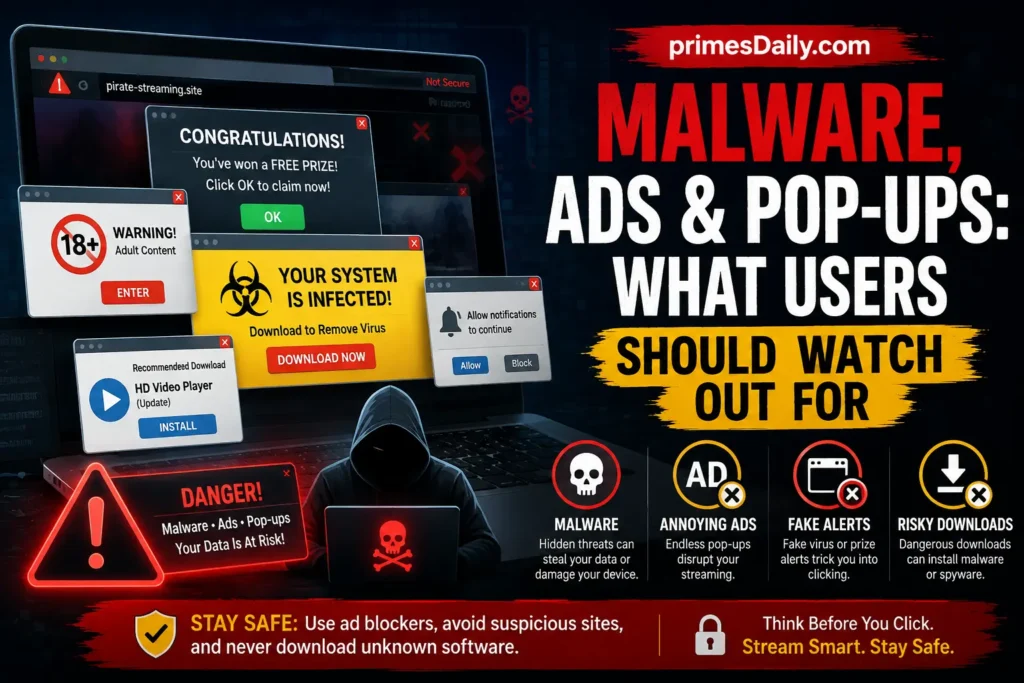
Piracy streaming sites are notorious for pop-up ads that open multiple new tabs, often leading to adult content, fake prize notifications, or software downloads. Some of these downloads are disguised as video players or browser extensions but are actually malware.
A general rule of thumb: legitimate streaming platforms almost never require you to install a separate player or plugin to watch content in a browser. If a site is prompting you to download something just to watch a video, that’s a red flag.
Why Piracy Sites Are Popular Despite the Risks
Despite the risks, piracy sites remain popular for a few understandable reasons. Licensed streaming services are often region-locked, meaning a show available in one country isn’t accessible in another. Subscription costs can add up quickly if a fan wants access to multiple platforms just to watch a handful of shows. And older, niche, or discontinued titles are frequently missing from licensed catalogs entirely, since licensing older content isn’t always commercially viable for streaming companies.
These gaps in legal availability are a major reason piracy persists, even as enforcement efforts continue.
For the latest, updated, and unique information, visit ARC Raiders Events.
The Impact of Piracy on the Anime Industry
Piracy has a direct financial impact on the anime industry. Studios, animators, voice actors, and translators rely on licensing revenue and subscription income to fund future productions. When large numbers of viewers watch through unauthorized sources, that revenue doesn’t reach the people who made the content.
This is especially significant for anime, since Japanese animation studios often operate on tighter margins than major Western film and TV studios. Reduced revenue can mean smaller budgets for future projects, fewer new licenses for international markets, and less support for the artists actually creating the work.
Why Some Older/Niche Anime Titles Are Hard to Find Legally
One of the most common complaints from anime fans is that older or lesser-known series are difficult to find on official platforms. This isn’t usually because streaming services don’t want to offer them — it’s a licensing issue. Rights to older anime are often split between multiple companies, may have expired agreements that need to be renegotiated, or were never picked up for international distribution in the first place.
As streaming platforms continue to expand their catalogs and licensing deals evolve, more older titles do eventually become available legally, but the process can take time.
Crunchyroll vs. Piracy Sites: A Legal Comparison
Crunchyroll is currently the largest legal anime streaming platform in most Western markets, and it makes for a useful comparison point.
With Crunchyroll, you get high-definition video, professionally translated subtitles and dubs, simulcasts of new episodes shortly after they air in Japan, and a platform that’s safe from malware, intrusive ads, and legal risk. The trade-off is a subscription cost for full access, and a somewhat smaller catalog of very old or obscure titles compared to what piracy sites claim to offer.
Piracy sites, by contrast, offer free access to a wide range of content, but with real risks: security threats, inconsistent video quality, unreliable uptime, ads that can be genuinely dangerous, and the ethical and legal issue of watching content without compensating the people who made it.
Other Legal Anime Streaming Platforms (Netflix, HIDIVE, Prime Video)
Crunchyroll isn’t the only legal option. Netflix has significantly expanded its anime catalog and now produces and licenses a number of original anime series. HIDIVE offers a smaller but dedicated catalog, often picking up niche titles that other platforms don’t carry. Amazon Prime Video holds exclusive licenses for certain series and offers both a standalone anime section and titles bundled with a broader Prime subscription.
Having multiple legal platforms available means fans increasingly have real alternatives to piracy, even if no single service has everything.
Free vs. Paid Legal Anime Streaming Options
Not every legal option requires payment. Several platforms offer ad-supported, free tiers with a smaller but genuine catalog of licensed anime. Crunchyroll, for example, offers a free ad-supported tier alongside its premium subscription. Some platforms also run seasonal free promotions or offer a selection of titles at no cost as a way to draw in new subscribers.
These free legal options won’t match the sheer size of a piracy site’s catalog, but they eliminate the malware, ad, and legal risks entirely, which for many viewers is a worthwhile trade-off.
How to Support the Anime Industry as a Fan
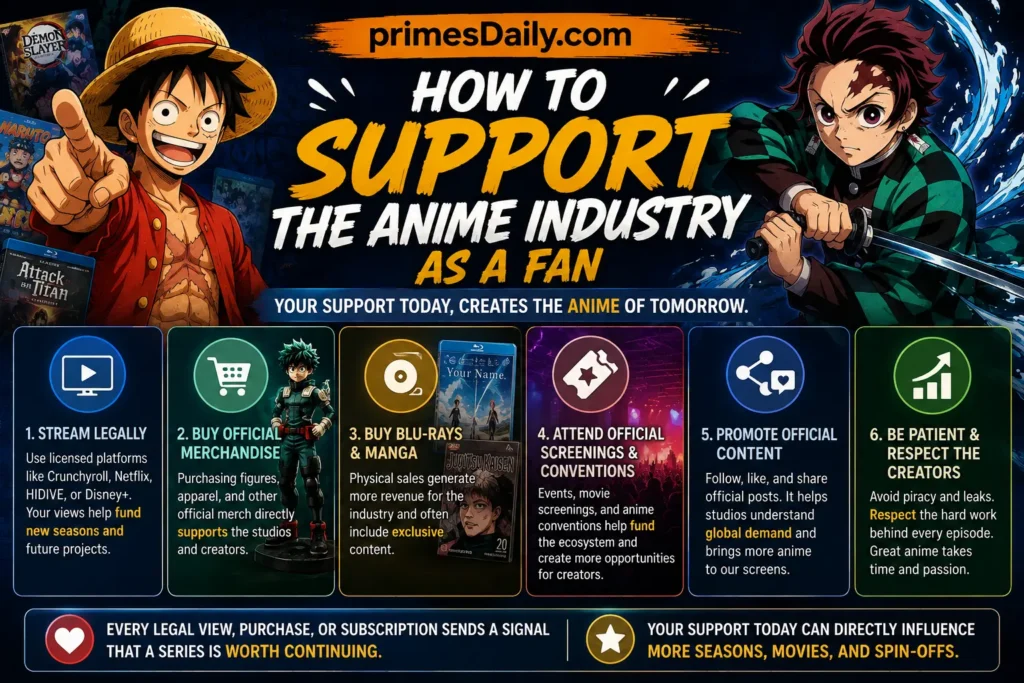
Fans who want to support the anime industry have several practical options beyond just paying for a streaming subscription. Buying official merchandise, Blu-rays, or manga volumes directly supports the creators. Attending official screenings or conventions helps fund the broader industry ecosystem. Following and promoting officially licensed content on social media also helps studios gauge demand for international releases and sequels.
Ultimately, every legal view, purchase, or subscription sends a signal that a series is worth continuing, which can directly influence whether more seasons or spin-offs get made.
FAQs
Is 9 anime safe to use? No. Because it isn’t a licensed platform, it isn’t subject to the security standards, ad vetting, or accountability that legitimate streaming services follow, which increases exposure to malware and scams.
Why does 9 anime keep changing domains? Copyright holders and anti-piracy organizations regularly pursue takedowns, forcing the site (and copycat versions using the same name) to relocate to new domains repeatedly.
Is it illegal to watch anime on 9 anime? Streaming copyrighted content without authorization is copyright infringement. Legal risk to individual viewers varies by country, but the core activity is not authorized by the copyright holders.
Are there any free legal ways to watch anime? Yes. Platforms like Crunchyroll offer free, ad-supported tiers with a genuine (if smaller) catalog of licensed anime.
Why is older anime harder to find on legal platforms? It usually comes down to licensing complexity — rights holders change, agreements expire, and older titles aren’t always renewed or picked up for streaming distribution.
Conclusion
9 anime represents a broader pattern in online piracy: a site offering free, unlicensed access to copyrighted content, repeatedly shut down and repeatedly reborn under new domains. While the appeal of free, unrestricted access is understandable, it comes with real security risks, legal issues, and a direct financial impact on the people who create anime. With legal platforms like Crunchyroll, Netflix, HIDIVE, and Prime Video continuing to expand their catalogs — including free, ad-supported options — fans have more legitimate ways than ever to enjoy anime safely while supporting the industry behind it.
For the latest, updated, and unique information, visit Illaoi Build.