
Puerto Rican food is one of the most flavorful and misunderstood cuisines in the Caribbean. People often lump it together with Mexican or Cuban cooking, but the truth is far more layered. This cuisine grew out of three very different worlds colliding on one island — the Taíno people who lived there first, the Spanish colonizers who brought pigs, rice, and citrus, and the Africans who were forcibly brought over and who gave the food its deep, slow-cooked soul. What came out of that collision is a style of cooking built on sofrito, adobo, plantains, rice, and pork, and it tastes like nothing else.
This guide is meant to answer every question you might have, from what to order at a restaurant to how to make the classics at home. Nothing here is padded with filler. You’ll get the real ingredient lists, the real cooking logic, and the real cultural context, all in one place, so you don’t need to go digging through five other articles to understand a dish.
What Is Puerto Rican Food? Cultural Roots and Influences
At its core, this style of cooking is a blend of three culinary traditions layered on top of each other over five centuries.
- Taíno foundations — The island’s original inhabitants ate corn, cassava (yuca), sweet potatoes, and used an open-fire cooking method called “barbacoa,” which is where the English word “barbecue” actually comes from. Many root vegetables still central to the diet today, like yautía and batata, trace straight back to Taíno farming.
- Spanish influence — Colonizers introduced rice, wheat, pork, citrus fruits, olive oil, garlic, and the sofrito-based sauce technique that anchors most savory dishes.
- West and Central African influence — Enslaved Africans brought plantains, okra, and slow-braising techniques, along with seasoning philosophies that rely on marination and patience rather than heavy spice.
The result is a cuisine that isn’t spicy in the way Mexican or Thai cooking can be. It’s seasoned, not scorched — built around aromatics rather than chili heat. That single fact surprises a lot of first-time diners.
Geography also shaped things. As an island, seafood naturally became part of the everyday diet along the coasts, while pork and root vegetables dominated inland kitchens. Spanish colonial trade routes brought in additional ingredients like olives, capers, and cured ham, which show up in stews and rice dishes even today.
Key Ingredients in Traditional Puerto Rican Cooking
If you understand these core building blocks, you can recognize almost any dish on a menu without needing a translation.
- Sofrito — A blended base of onions, garlic, cubanelle peppers, culantro (not cilantro), and sometimes ajíes dulces (sweet peppers). It’s the flavor engine behind rice, beans, and stews.
- Adobo — A dry or wet seasoning mix of garlic powder, oregano, black pepper, and salt, rubbed directly onto meat before cooking.
- Sazón — A seasoning blend that includes annatto (achiote), which gives many rice and stew dishes their signature orange-red color.
- Plantains — Used at every ripeness stage, from green (starchy, savory) to fully black (sweet, caramelized).
- Rice and pigeon peas (gandules) — The starch backbone of most meals.
- Pork — The most commonly used protein, prepared slow-roasted, fried, or stewed.
- Root vegetables (viandas) — Yuca, yautía, batata, and green bananas, usually boiled and served alongside stewed meats.
Once these ingredients click for you, the entire menu at a Puerto Rican restaurant starts to make a lot more sense.
Traditional Puerto Rican Dishes You Must Try
These are the dishes locals actually grew up eating at home, not the tourist-menu versions.
Mofongo — The Signature Dish
Mofongo is green plantains fried until crisp, then mashed in a wooden pilón (mortar) with garlic, olive oil, and pork cracklings called chicharrón. It’s shaped into a dome and usually served with a side of chicken broth to keep it moist, plus a protein either stuffed inside or served alongside — shrimp, churrasco steak, or stewed chicken are the most common pairings.
Variations worth knowing:
- Trifongo — Mixes green plantain, sweet plantain, and yuca for a layered texture.
- Yuca mofongo — Swaps plantain for cassava, giving a starchier, slightly sweeter base.
If you only try one dish on this entire list, this is the one locals will tell you to order first.
Arroz con Gandules — The National Dish
This is yellow rice cooked with pigeon peas, sofrito, and often small pieces of pork or ham, colored with annatto oil. It’s considered the national dish for a reason — it shows up at nearly every holiday table, every family gathering, and most weeknight dinners. The rice should be slightly sticky, never mushy, and the pigeon peas add a subtle earthiness that plain rice doesn’t have.
Pernil and Lechón Asado
Pernil is a pork shoulder marinated overnight in adobo and slow-roasted for hours until the skin turns into shattering-crisp cracklings and the meat falls apart with a fork. Lechón asado takes this further — a whole pig, marinated and roasted slowly over coals for most of a day, traditionally associated with the town of Guavate, where entire roadside restaurants exist just to serve it. Both dishes share the same marination logic but differ in scale and occasion — pernil is a Sunday dinner, lechón is a celebration.
Pasteles
Often mistaken for tamales, pasteles are actually made from a masa of grated green banana, plantain, and root vegetables rather than corn. The filling is typically seasoned pork, and the whole thing is wrapped in banana leaves, tied with string, and boiled. These are labor-intensive to make, which is why they’re strongly associated with Christmas and rarely made outside the holiday season in most households.
Pastelón and Piñón
Pastelón is frequently described as “Puerto Rican lasagna” — layers of sweet, caramelized plantain replacing pasta, filled with seasoned ground beef picadillo and sometimes cheese, then baked. Piñón is its close cousin, using beaten egg to bind the layers instead of stacking them lasagna-style, giving it a texture closer to a frittata. Both are comfort food you’re more likely to find in a home kitchen or a small family-run restaurant than a street kiosk.
Tostones vs Amarillos
These two plantain preparations confuse a lot of first-timers because they come from the same ingredient at different ripeness stages.
- Tostones — Made from unripe green plantain, sliced thick, fried once, smashed flat, then fried again until crispy. Savory, and usually served with a garlic dipping sauce called mojo.
- Amarillos — Made from ripe yellow-to-black plantain, sliced and fried once until the edges caramelize. Sweet, soft, and almost dessert-like.
Knowing the difference means you’ll never be surprised by what lands on your plate.
Popular Puerto Rican Street Food
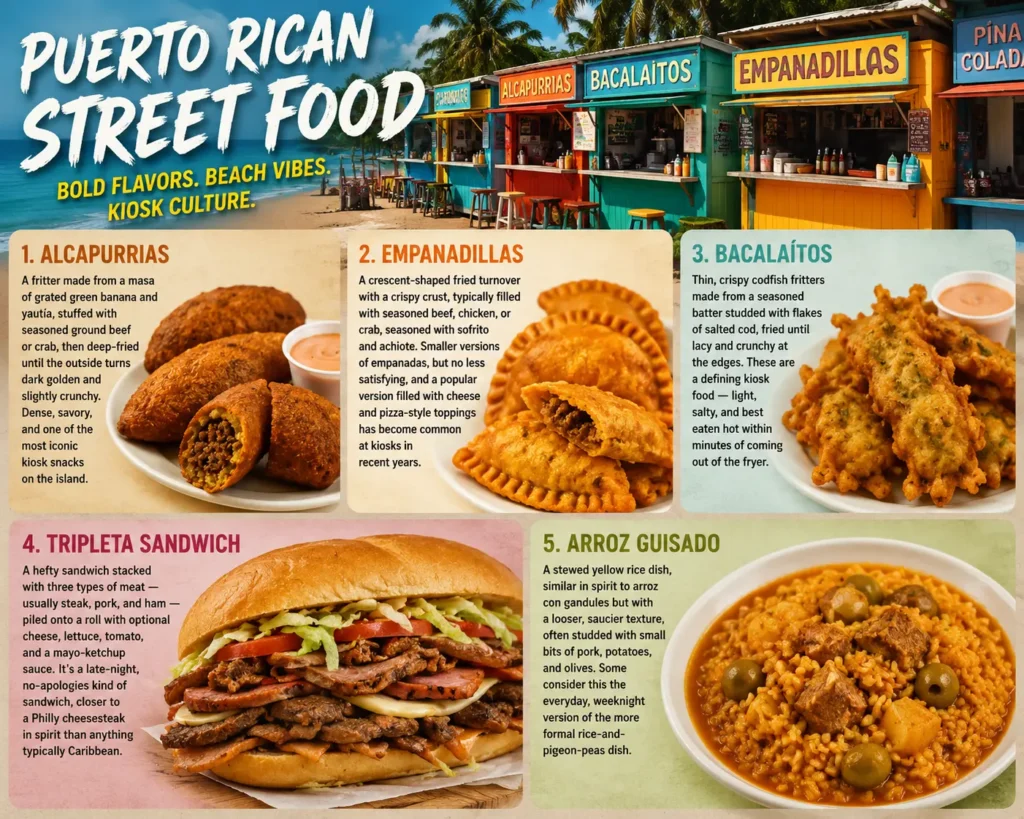
Street food culture here revolves around beachside kiosks, especially in areas like Piñones and Luquillo, where entire strips of small stands sell fried snacks side by side.
Alcapurrias
A fritter made from a masa of grated green banana and yautía, stuffed with seasoned ground beef or crab, then deep-fried until the outside turns dark golden and slightly crunchy. Dense, savory, and one of the most iconic kiosk snacks on the island.
Empanadillas
A crescent-shaped fried turnover with a crispy crust, typically filled with seasoned beef, chicken, or crab, seasoned with sofrito and achiote. Smaller versions of empanadas, but no less satisfying, and a popular version filled with cheese and pizza-style toppings has become common at kiosks in recent years.
Bacalaítos
Thin, crispy codfish fritters made from a seasoned batter studded with flakes of salted cod, fried until lacy and crunchy at the edges. These are a defining kiosk food — light, salty, and best eaten hot within minutes of coming out of the fryer.
Tripleta Sandwich
A hefty sandwich stacked with three types of meat — usually steak, pork, and ham — piled onto a roll with optional cheese, lettuce, tomato, and a mayo-ketchup sauce. It’s a late-night, no-apologies kind of sandwich, closer to a Philly cheesesteak in spirit than anything typically Caribbean.
Arroz Guisado
A stewed yellow rice dish, similar in spirit to arroz con gandules but with a looser, saucier texture, often studded with small bits of pork, potatoes, and olives. Some consider this the everyday, weeknight version of the more formal rice-and-pigeon-peas dish.
Puerto Rican Seafood Dishes
Coastal towns lean heavily on fresh catch, and the seafood dishes here have their own distinct identity separate from the pork-and-rice dishes inland.
- Ceviche — Fresh fish marinated in citrus, onion, and cilantro until the acid “cooks” the fish. A common warm-weather starter, especially near the coast.
- Bacalao-based dishes — Salted cod shows up far more than fresh fish in traditional cooking, largely because it was easy to preserve and ship during colonial trade. Buñuelos de bacalao and croquetas de bacalao are fried cod fritters and croquettes, while guanimes con bacalao wraps a cornmeal-and-coconut dough around stewed salted cod, similar in concept to a tamale but distinct in flavor.
If you’re eating along the coast, seafood dishes are usually fresher and more prominent on the menu than they would be further inland.
For the latest, updated, and unique information, visit Stitch Coloring Pages.
Puerto Rican Desserts and Drinks
The sweet side of this cuisine leans on coconut, condensed milk, and rum rather than chocolate or refined sugar work.
Tembleque
A silky coconut milk pudding thickened with cornstarch, dusted with cinnamon on top. The name comes from the Spanish word for “shaky,” referring to its wobbly, custard-like texture once it sets. Light, not overly sweet, and a common palate-cleanser after a heavy meal.
Coquito
Often described as Puerto Rican eggnog, coquito is a blend of coconut milk, coconut cream, condensed milk, spices, and white rum, chilled and typically served around the winter holidays. Every family tends to have its own closely guarded recipe, and the spice blend and rum ratio can vary wildly from household to household.
Best Places to Eat Authentic Puerto Rican Cuisine
The most authentic experiences usually come from small, family-run spots rather than large restaurant chains. A few patterns worth knowing if you’re trying to find the real thing wherever you are:
- Look for kiosk-style stands clustered together — this format almost always signals family-owned, generational recipes rather than a commercial operation.
- Seek out restaurants that list pernil, mofongo, and pasteles as daily specials rather than rare menu items — that’s usually a sign the kitchen is cooking from tradition, not from a shortcut menu.
- Ask about lechón specifically — spots that slow-roast whole pigs regularly, rather than as a once-a-year event, tend to take the rest of the menu just as seriously.
- Neighborhood spots with handwritten specials boards or limited seating are frequently better indicators of authenticity than large, heavily marketed restaurants.
What to Order at a Puerto Rican Restaurant
If you’re new to this cuisine and don’t know where to start, this order sequence works well for almost anyone:
- Start with tostones as an appetizer — they’re familiar enough to ease you in.
- Order mofongo with shrimp or churrasco as your main — it’s the most representative single dish of the entire cuisine.
- Add a side of arroz con gandules if it isn’t already part of your main.
- Finish with tembleque or, if it’s the holiday season, ask if coquito is available.
This sequence hits the savory, starchy, and sweet notes that define the cuisine without overwhelming a first-timer.
Dietary Notes and Substitutes for Traditional Puerto Rican Dishes
Traditional cooking here is not naturally vegetarian, vegan, or gluten-free, but there are ways to navigate it.
- Vegetarian diners should watch for pork fat used in rice and bean dishes, even when the dish looks meat-free at first glance — chicharrón and pork stock are common hidden additions. Tostones, amarillos, and most root vegetable sides are naturally vegetarian.
- Vegan diners need to also watch for butter, cheese, and condensed milk in desserts, plus lard used in frying at some traditional kitchens. Ceviche and most fried plantain dishes are usually safe, but it’s worth confirming the frying oil.
- Gluten-free diners are generally in good shape, since rice, plantains, and root vegetables form the base of most dishes rather than wheat. Empanadillas and some pastry-wrapped items are the main exception to watch for.
- Pork allergies or restrictions require extra caution, since pork fat, pork stock, or small pieces of ham show up as background seasoning in dishes that don’t obviously look pork-based, including many rice dishes.
Always ask directly rather than assuming — even dishes that look plant-based often carry pork-based seasoning as a default.
Puerto Rican Cuisine vs Other Latin and Caribbean Cuisines
People frequently confuse this cuisine with its neighbors, so here’s what actually separates it.
- Versus Mexican food — Rarely chili-forward. Seasoning leans on garlic, oregano, and citrus rather than capsaicin heat, and corn tortillas aren’t part of the tradition at all.
- Versus Cuban food — Shares Spanish and African roots and a love of pork, but Cuban cooking uses more citrus-forward mojo marinades and skips pigeon peas almost entirely in favor of black beans.
- Versus Dominican food — Very close in ingredients and technique, but Dominican cooking leans more on mangú (mashed plantain without frying) versus the fried, pounded texture of mofongo, and uses different seasoning ratios in its version of sofrito.
- Versus Jamaican food — Much less reliant on Scotch bonnet chili heat and jerk-style dry rubs; the seasoning philosophy here is wetter, garlic-and-herb based rather than spice-forward.
Once you taste them side by side, the differences become obvious — this cuisine sits in its own lane, closer to “seasoned and slow-cooked” than “spicy and grilled.”
How to Cook Puerto Rican Dishes at Home
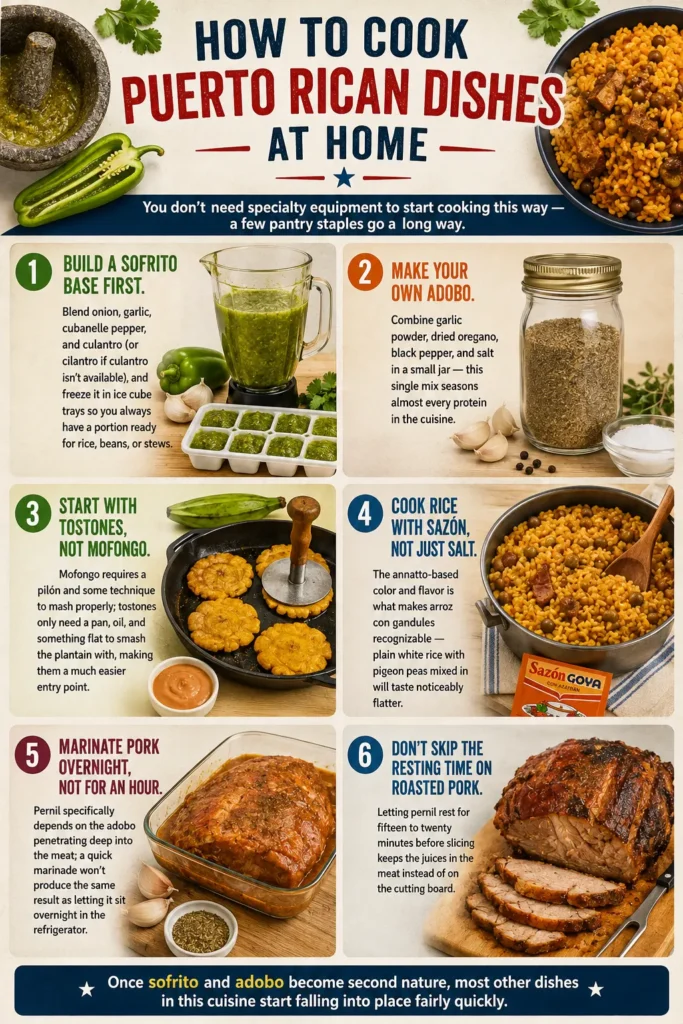
You don’t need specialty equipment to start cooking this way — a few pantry staples go a long way.
- Build a sofrito base first. Blend onion, garlic, cubanelle pepper, and culantro (or cilantro if culantro isn’t available), and freeze it in ice cube trays so you always have a portion ready for rice, beans, or stews.
- Make your own adobo. Combine garlic powder, dried oregano, black pepper, and salt in a small jar — this single mix seasons almost every protein in the cuisine.
- Start with tostones, not mofongo. Mofongo requires a pilón and some technique to mash properly; tostones only need a pan, oil, and something flat to smash the plantain with, making them a much easier entry point.
- Cook rice with sazón, not just salt. The annatto-based color and flavor is what makes arroz con gandules recognizable — plain white rice with pigeon peas mixed in will taste noticeably flatter.
- Marinate pork overnight, not for an hour. Pernil specifically depends on the adobo penetrating deep into the meat; a quick marinade won’t produce the same result as letting it sit overnight in the refrigerator.
- Don’t skip the resting time on roasted pork. Letting pernil rest for fifteen to twenty minutes before slicing keeps the juices in the meat instead of on the cutting board.
Once sofrito and adobo become second nature, most other dishes in this cuisine start falling into place fairly quickly.
FAQs
What is the national dish of Puerto Rico? Arroz con gandules — yellow rice with pigeon peas — is widely considered the national dish, appearing at nearly every family gathering and holiday table across the island.
Is Puerto Rican food spicy? No, not in the chili-heat sense most people expect. Seasoning relies on garlic, oregano, and sofrito rather than hot peppers, so most dishes are aromatic and savory rather than fiery.
What is the difference between mofongo and tostones? Both start from fried green plantain, but tostones are simply smashed and fried flat as a side dish, while mofongo is mashed with garlic, olive oil, and pork cracklings into a dense, mounded main course.
What meat is most commonly used in Puerto Rican cooking? Pork, by a wide margin — used fresh in pernil and lechón, in cracklings for mofongo, and as small background pieces seasoning rice and stews.
Are pasteles the same as tamales? No. Pasteles use a masa made from grated green banana, plantain, and root vegetables, while tamales use corn masa. The filling and wrapping method also differ significantly between the two.
What do Puerto Ricans typically drink with their food? Coquito during the holidays, along with rum-based cocktails and fresh tropical fruit juices year-round; coffee is also deeply embedded in the everyday food culture.
Can I find authentic Puerto Rican dishes outside of Puerto Rico? Yes — cities with large Puerto Rican communities, particularly in the northeastern United States, often have family-run restaurants and kiosks serving dishes close to what you’d find on the island itself.
Conclusion
This cuisine rewards curiosity. Once you understand the role sofrito, adobo, and plantains play across nearly every dish, the entire tradition stops feeling like a random list of unfamiliar names and starts making sense as one connected story. Whether you’re trying mofongo for the first time, working through a plate of alcapurrias at a beachside kiosk, or attempting pernil in your own kitchen, the same core techniques and ingredients keep showing up in different forms. That consistency is exactly what makes this cuisine so distinct — and so worth exploring properly, rather than settling for a generic version of it.
For the latest, updated, and unique information, visit Perfect Order Card.