

When someone is approaching the end of their life, their body goes through several changes that can be both physical and emotional for those around them. One of the most noticeable and often misunderstood signs that death is approaching is the presence of unusual breathing sounds. These sounds, commonly referred to as noisy breathing or terminal respiratory secretions, can be alarming for family members and caregivers who witness them for the first time. Many people worry that their loved one is suffering or in pain, but the reality is far more nuanced than the sound itself suggests.
Have you ever wondered what causes these haunting sounds during the final stages of life? Are you concerned about whether your loved one is experiencing distress? Do you wish someone could simply explain what’s happening in clear, straightforward terms without overwhelming medical jargon? Perhaps you’re asking “what is the death rattle?” or seeking to understand the meaning behind these unusual breathing patterns. If you’re searching for answers, you’ve come to the right place. This comprehensive guide will walk you through everything you need to know about terminal respiratory secretions, from the science behind the phenomenon to practical strategies for managing it and supporting your loved one through this delicate time.
Understanding this aspect of the dying process isn’t just about medical knowledge—it’s about compassion, preparation, and being present for someone you care about during their most vulnerable moments.
What Is the Death Rattle?
People often ask, “what is a death rattle?” and “what is the death rattle meaning?” Terminal respiratory secretions, more commonly known by the term many people use, refers to a specific type of noisy breathing that occurs in people who are near the end of their life. But what exactly is it?
At its core, this phenomenon occurs when a person’s body can no longer effectively clear fluids from the back of the throat and upper airways. The fluids—which might be saliva, mucus, or bronchial secretions—accumulate in these passages. As the person continues to breathe, air moving through these secretions creates sound. Think of it like blowing air through water in a straw; the turbulent air creates noise as it passes through the liquid.
The death rattle sound has a distinctive quality. Some people describe it as a rattling noise, while others hear it as gurgling, crackling, or even a soft moaning sound. There’s no single way this sound occurs because every person’s airways are different, their breathing patterns vary, and the amount of accumulated secretions differs from person to person. That’s why one person’s death rattle meaning and sound quality might differ significantly from another’s. Understanding what is a death rattle helps families recognize the phenomenon with less alarm.
It’s crucial to understand that this is a symptom of the dying process itself, not a disease or condition that developed independently. When someone reaches the very final stages of life—typically the last hours, days, or occasionally the last weeks—their body’s ability to manage basic functions begins to decline. Swallowing becomes difficult or nearly impossible. Coughing becomes weak or disappears entirely. The muscles involved in clearing the airway lose their effectiveness. All of these changes combine to create the conditions where terminal respiratory secretions develop.
Here’s something important to know: research from 2024-2025 shows that not everyone in the final stages of life develops these sounds. Some people maintain clearer breathing right until the end. This variation is completely normal and doesn’t necessarily mean one person’s death was better or worse than another’s.
Understanding Death Rattle in Medical Context
From a medical and physiological perspective, understanding how death rattle occurs and what causes terminal respiratory secretions in someone dying represents a very specific chain of events in the human body. To truly understand what’s happening when someone develops these symptoms near the end of life, let’s break down the mechanism and explore why death rattle happens during the dying process:
When someone is healthy and conscious, they swallow constantly throughout the day without thinking about it. Every few seconds, saliva and mucus produced by the lungs and throat are automatically swallowed. Swallowing is one of those remarkable automatic functions that keeps us healthy without requiring any conscious effort. The body produces these secretions continuously because they serve protective and lubricating functions. The mucus in your lungs, for example, traps particles and bacteria, keeping your respiratory system clean.
As someone approaches death, especially during the terminal phase, consciousness gradually diminishes. One of the first automatic functions to be affected is the swallowing reflex. The person becomes less and less able to swallow, even small amounts. At the same time, the body often continues producing secretions, or may even increase production. This creates an imbalance: the body is producing fluids, but the person can no longer swallow or clear them effectively.
These accumulated secretions sit in the back of the throat and upper airway. When the person breathes, air has to pass through these pooled fluids. The movement of air through liquid creates vibration, which produces sound. The amount of sound correlates somewhat with how much fluid has accumulated and how forcefully the person is breathing, though the relationship isn’t perfectly predictable.
What makes this particularly significant from a medical standpoint is what it indicates about the body’s overall state. The development of terminal respiratory secretions is generally a sign that the dying process has entered a particular phase. It typically appears in the final 24-48 hours of life, though some people may show these signs for a longer period. Medical professionals view its presence as a clinical indicator of advancing end-of-life status.
The physiology also helps explain why certain management approaches work better than others. If the mechanism is an accumulation of fluids in the airway, then any approach that either reduces fluid production or helps drain existing fluids makes logical sense. This understanding has shaped how healthcare providers approach managing the symptom.
Biological mechanisms involved:
- Decreased swallowing reflex due to altered consciousness
- Decreased coughing ability due to respiratory muscle weakness
- Increased or continued production of bronchial secretions
- Pooling of saliva and respiratory secretions in the upper airway
- Turbulent airflow creating audible vibration through accumulated fluids
What Does the Death Rattle Sound Like?
One of the most valuable ways to understand terminal respiratory secretions is to answer the common question: “What does the death rattle sound like?” Many people describe anxiety about this symptom precisely because they don’t know what to expect. Will it sound like their loved one is choking? Will it be constant? Will it be quiet or very loud?
The truth is that there’s considerable variety in how these sounds present, and that variety is completely normal.
Some people hear a distinct rattling sound—something like when you shake a container with dried beans or pebbles inside. This is where the common terminology comes from. The sound has a dry, rolling quality to it. Understanding how the death rattle sounds helps distinguish it from other breathing difficulties.
Others describe a gurgling or bubbling sound, as if fluid is moving through the throat and upper airway. This typically indicates there’s a more significant amount of liquid pooled in the airways. It might remind someone of the sound a water fountain makes, or like someone drinking through a straw.
Crackling or wet sounds are common too. Some people say it’s similar to the sound of cereal crackling with milk, or like velcro being pulled apart quickly and repeatedly. This usually indicates saliva or mucus in the airway creating friction as air passes through. The specific death rattle sound varies considerably from person to person.
Some patients produce more of a soft moaning with each breath—not the intense sound many people expect, but rather a gentle, almost muted noise that’s only apparent when you’re quiet and listening closely.
Snoring-like sounds occur in some people, particularly if their head is positioned in a certain way or if their tongue positioning has changed.
The intensity also varies dramatically. Some terminal respiratory secretions are so quiet that you almost have to lean in to hear them. Others are quite loud and can be heard from across a room. The same person might have quieter breathing at one time and louder breathing at another, as the amount of accumulated secretions changes.
Frequency is another variable. Some people have continuous sounds with nearly every breath. Others have intermittent sounds—breathing clearly for several breaths, then producing sounds for a few breaths, then clearing again. This pattern often changes over time.
The rhythm of the sounds doesn’t necessarily match normal breathing rhythms. The person might breathe several times quietly, then produce multiple loud sounds in a row.
What’s particularly important to understand is that the presence and character of these sounds don’t necessarily correlate with how the person is experiencing the moment. Someone with very loud, dramatic terminal respiratory secretions may be completely unconscious and unaware. Someone with barely audible sounds might similarly be deep in sleep or sedation. The sound itself, while distressing to hear, is primarily a burden for those listening rather than for the person experiencing it.
Death Rattle vs Other Terminal Sounds
This distinction matters because understanding what makes death rattle and terminal respiratory secretions unique helps you understand what you’re actually witnessing when someone is dying and why it’s happening. Knowing the difference between terminal respiratory secretions and other types of abnormal breathing near end of life helps distinguish this symptom from other dying process indicators.
Agonal breathing is sometimes confused with terminal respiratory secretions and death rattle, but they’re distinct phenomena. Agonal breathing refers to gasping or labored breathing patterns that occur in the final moments or hours of life. It’s characterized by irregular, often dramatic breathing—sometimes with long pauses between breaths, sometimes with sudden, forceful inhalations. It may or may not produce the characteristic death rattle sound. Agonal breathing can be more distressing to witness because of its dramatic, gasping quality, but it’s also generally a sign that death is imminent, usually within minutes to hours of the dying process.
Stridor is another respiratory sound you might hear in some situations. This is a high-pitched, squeaky sound that’s usually heard on inhalation (breathing in) rather than throughout the breath. While stridor can occasionally occur in the dying process, it’s more commonly associated with airway obstruction or certain medical conditions. It typically requires different management than terminal respiratory secretions.
Cheyne-Stokes respiration is a breathing pattern where breathing becomes very deep and rapid for a period, then gradually becomes shallower, and then there’s a pause before the cycle repeats. It may or may not produce sounds. This pattern often appears in the dying process but is technically a breathing pattern rather than a secretion-based sound.
Ataxic respiration involves completely irregular breathing—random variations in depth and frequency without any pattern. This is also distinct from terminal respiratory secretions and often indicates significant changes in how the brain is controlling breathing.
Why does this distinction matter? Partly because understanding what’s actually happening helps reduce anxiety. It also matters clinically because different sounds might suggest different management approaches. If someone is truly choking on an obstruction (different from terminal respiratory secretions), that requires different intervention than if they’re producing sounds from fluid accumulation. A healthcare provider’s description of what they’re hearing helps them determine what’s most likely happening and what might help.
Why Does the Death Rattle Happen?
Understanding the underlying causes and reasons why a death rattle occurs helps explain why certain management strategies work and why others don’t. It also helps you understand that these terminal respiratory secretions represent a natural consequence of the dying process, not a failure of end-of-life care or a sign of active suffering. Knowing why death rattle happens provides context for accepting this symptom as part of the natural dying process.
The primary mechanism is straightforward: accumulation of secretions that the person can no longer clear. But what leads to this accumulation? Several interconnected physiological changes converge:
Decreased consciousness is typically the first major change. As someone approaches death, they increasingly drift into sleep or sleep-like states. This isn’t distressing for them—in fact, many palliative care specialists view this natural reduction in consciousness as the body’s own way of reducing the perception of discomfort. However, consciousness and automatic reflex functions are linked. As consciousness fades, so do automatic reflexes, including the swallowing reflex. The person simply stops swallowing with their normal frequency.
Loss of swallowing ability is perhaps the most direct cause. When someone is alert and able to swallow, they swallow dozens of times per hour without thinking about it. Each swallow clears saliva and any mucus that has accumulated. But in the dying process, this automatic reflex gradually diminishes. Eventually, a person may try to swallow and find they can’t, or they simply don’t initiate the swallow at all because they’re not alert enough. Even offering them sips of water becomes impossible because they can’t manage the swallowing action.
Increased secretion production happens in some people as death approaches. The body may increase production of bronchial secretions as a response to the various changes happening. This increased production, combined with an inability to clear secretions, creates the conditions for accumulation.
Weakened coughing adds to the problem. Coughing is one of the body’s mechanisms for clearing airways. A healthy person might cough occasionally to clear their throat. In the dying process, the cough reflex weakens along with overall muscle strength. A weak cough produces little clearing action. Eventually, coughing may disappear entirely.
Immobility is another factor. When someone is very ill and near death, they’re typically not moving around. Gravity and body position affect where secretions pool in the airway. In an alert, mobile person, changing position helps secretions drain. In someone who’s immobile or semi-conscious, secretions may pool in specific areas, particularly the back of the throat.
Reduced fluid intake is also relevant. As death approaches, people naturally eat and drink less. In the dying process, many people voluntarily stop taking fluids, which is considered a natural part of the process by most medical professionals. Some also have reduced intake because swallowing becomes difficult or because they’re simply not conscious enough to eat or drink. However, what might seem counterintuitive is that reducing fluid intake doesn’t necessarily reduce secretion production, because the body continues producing saliva and bronchial secretions regardless of oral intake.
Medication effects can play a role too. Some medications used in end-of-life care for comfort (like opioids) can actually increase secretion production as a side effect, even while helping with pain or breathing difficulty. This is a calculated choice—the benefits in terms of comfort often outweigh the side effect of increased secretions.
The dying brain’s chemical changes also matter. As the brain’s function changes in the dying process, the regulation of various body functions shifts. The control of secretion production and airway reflexes becomes less coordinated.
All of these factors rarely occur in isolation. Usually, several of them are happening simultaneously, creating the perfect conditions for terminal respiratory secretions. Understanding this helps explain why these sounds are essentially universal in people who die after a period of unconsciousness—it’s not a medical failure; it’s a natural consequence of the dying process.
Physiological Causes of Death Rattle
Let’s dive deeper into the specific physiological mechanisms that create these sounds, because understanding the “how” helps you grasp why various management approaches make sense.
Fluid dynamics in the airway: When a person swallows normally, they’re moving material backward toward the esophagus. The throat is designed with a particular shape and muscle action that facilitates this movement. But when someone isn’t swallowing, or is swallowing only rarely, fluid gradually pools in specific areas—particularly the vallecula (the area at the base of the tongue) and the pyriform sinuses (small pouches on either side of the throat).
Vibration theory: The sound itself is created through vibration. When air moves through an airway that contains fluid, the boundary between air and liquid creates vibration as they interact. The frequency and intensity of vibration depend on several factors: the viscosity of the fluid (thicker fluids vibrate differently than thin ones), the velocity of airflow (deeper, faster breathing creates more dramatic vibration), and the amount of fluid present.
Tissue involvement: The actual structures producing sound are the tissues of the upper airway—the pharynx, soft palate, tongue, and vocal cords. These tissues vibrate as air passes through the fluid above them. Different people have different anatomies, which partly explains why the sound varies from person to person.
Secretion composition: The mix of what’s accumulating also matters. Pure saliva has different acoustic properties than mucus mixed with saliva. Some people produce thicker, stickier secretions, while others have thinner ones. This affects both the sound produced and how easily secretions might drain if the person’s position changes.
Gravity’s role: When a person is upright or semi-upright, gravity helps some secretions drain toward the esophagus and stomach. When someone is lying flat on their back, secretions more easily pool in the back of the throat. This is why positioning is considered an important part of management—changing position changes where secretions pool and can sometimes reduce the sounds produced.
Respiratory muscle strength: The force of breathing affects the volume of sound produced. Someone taking deep, forceful breaths will produce louder sounds through the fluid. Someone with shallow, weak breathing might produce quieter sounds, even with the same amount of accumulated secretions.
How Long Does the Death Rattle Last?
One of the most common questions from family members is about duration. How long will this continue? Will it last for hours? Days? Will it persist right until the end? Families often search for answers like “how long does death rattle last?” and “how long after death rattle occurs does death happen?” These questions make sense because the sounds can be distressing to witness, and uncertainty about how long to expect them adds stress.
The answer, unfortunately, is variable—but understanding the patterns can help with preparation and management.
Duration ranges: Terminal respiratory secretions can last anywhere from a few minutes to several days. For some people, these sounds appear only in the very final hours or minutes of life. For others, death rattle breathing patterns develop and persist for two to three days or occasionally even longer. Understanding how long does a death rattle last helps families prepare emotionally.
Average duration: Research from recent studies (2023-2025) suggests that when terminal respiratory secretions are present, they’re most commonly heard for somewhere between 12 to 72 hours before death occurs. But this is an average—many people fall outside this range. The question “how long do you live after the death rattle starts?” is particularly pressing for families facing this situation.
Factors affecting duration: Several things influence how long the sounds continue:
- Overall health status: Someone who’s been declining gradually over weeks or months may experience terminal respiratory secretions for longer than someone whose death comes more suddenly.
- Cause of death: The underlying disease or condition contributing to death affects the trajectory. Cancer patients, for example, sometimes have different patterns than those dying from heart disease or respiratory conditions.
- Fluid balance: Someone who’s receiving significant fluid intake (through IV fluids, for example) may have more accumulated secretions and longer duration of sounds than someone not receiving fluids.
- Medication: Certain medications can reduce secretion production (anticholinergic drugs), potentially shortening the duration of audible sounds, though this isn’t guaranteed.
- Body position and management: Frequent repositioning and active management can sometimes reduce the duration or intensity of sounds.
- Individual variation: Some people’s bodies simply handle the dying process differently. There’s no perfect predictor.
The pattern of sounds: It’s also important to note that terminal respiratory secretions often don’t remain at the same intensity throughout. They might be present for a while, then seem to improve, then return. They might be very loud at one time and much quieter hours later. This fluctuation is completely normal and doesn’t necessarily indicate that death is delayed or approaching faster.
When they stop: The sounds generally persist until death occurs, or they may actually become quieter just before death (sometimes called “the death rattle resolving”). Some people stop producing audible sounds in their final minutes or moments, even though they’re still breathing.
How Long After Death Rattle Does Death Occur?
This is perhaps the question that carries the most emotional weight for families. If someone is producing these sounds, how much time do we have left? Hours? Minutes? Days? Families desperately want to know “how long after death rattle does someone die?” or “how long after death rattle occurs will death happen?”
Average timeframe: The most commonly cited research suggests that when terminal respiratory secretions begin, death typically occurs within an average of 12 to 48 hours. However—and this is crucial—this is an average. Some people die within minutes of the sounds beginning. Others continue for several days. Understanding how long to death after death rattle begins requires nuance and individualized assessment.
The Merck Manual (2025 update) and recent palliative care literature note that terminal respiratory secretions are indeed a sign of advanced death approaching, but the timeline for how long after death rattle occurs before death is highly variable and unpredictable at an individual level. Questions like “how long after death rattle until death?” simply don’t have universal answers.
Important limitations of predictions: One of the hardest truths in end-of-life care is that we can’t predict with precision when someone will die, even after clear signs like terminal respiratory secretions appear. Medical professionals can make educated guesses based on patterns, but individual variation is huge. Someone expected to die within hours might live for days. Someone with multiple end-of-life signs might die unexpectedly quickly.
Why predictions are difficult:
- The dying process is unique to each person: Two people might have identical diagnoses and appear equally ill, but their dying trajectories can be completely different.
- Hidden variables: Factors we can’t observe directly—like the exact state of organ function, subtle changes in brain activity, or cellular-level changes—affect the timeline.
- Interaction effects: When multiple end-of-life signs are present (like terminal respiratory secretions plus decreased consciousness plus changes in skin color), the pattern of how they interact varies.
- Individual physiology: Genetic factors, overall constitution, how the body has responded to illness up until this point—all affect the timeline.
What healthcare providers can tell you: A good palliative care team can often tell you whether someone is likely in their final hours, days, or week or two based on multiple signs together. But they’ll typically frame this carefully: “He may be in his final hours or a day or two” rather than “He’ll die at 6 AM tomorrow.” The honest answer is that prediction at a precise level isn’t really possible.
Why knowing this matters: Understanding that terminal respiratory secretions are a sign of advanced dying without being able to predict the exact timing helps set realistic expectations. It means you should treat each time with the person as potentially precious because you truly don’t know how much time remains, but it also means planning for the possibility of several more days or even a week or two, not just hours.
Patient Burden During Death Rattle
This brings us to one of the most important questions families ask: Is my loved one suffering? Are they in pain or distress because of these sounds? Some people also wonder, “has anyone survived the death rattle?” or whether this symptom always leads to death.
The honest answer, based on extensive research and clinical experience, is nuanced. Let’s unpack it carefully.
The scientific evidence: Multiple research studies, including those published in palliative care journals through 2024-2025, consistently indicate that people who are producing terminal respiratory secretions are typically unconscious or nearly unconscious. The sounds developing is often preceded by declining consciousness. By the time the sounds are prominent, most people are not responsive. While the question “can someone survive death rattle?” has a technical answer (yes, people have survived after developing these sounds), the symptom is generally a reliable indicator of advanced dying rather than a sign of recovery.
Unconsciousness and terminal respiratory secretions go together: This is important to understand. The same process that makes swallowing impossible—the profound decline in consciousness and brain function—means the person isn’t aware of the rattling sound. They’re not hearing it the way you are. They’re not experiencing it as uncomfortable or distressing. The presence of noisy breathing near death reflects this neurological decline, not active suffering.
What the research shows: Studies specifically examining whether people in the dying process with terminal respiratory secretions show signs of distress—through observation of facial expressions, body tension, vital sign changes, or other indicators—generally find that people don’t show signs of active suffering from the sounds themselves. This doesn’t mean they might not be uncomfortable from other things (pain, shortness of breath or difficulty breathing), but specifically from the terminal secretions and noisy breathing, there’s minimal evidence they’re suffering.
Why this makes sense physiologically: The areas of the brain that process sound and respond to auditory stimuli are less active in someone who’s profoundly unconscious. The person doesn’t have the cognitive awareness to interpret the sound as problematic.
But what about fear of choking?: A common concern from family members is whether the person feels like they’re choking. Physiologically, this is unlikely in the terminal phases. The sensation of choking requires certain cognitive and conscious awareness. Someone in profound unconsciousness, even if fluid is present in the airway, isn’t likely experiencing the subjective sensation of choking.
Other symptoms matter more: Research from the Netherlands and other regions studying end-of-life experiences consistently finds that when relatives report that the dying person seemed distressed, it’s usually because of other symptoms—pain, difficulty breathing, agitation—not because of terminal respiratory secretions specifically.
This understanding is crucial because it helps guide management priorities. Rather than aggressively treating terminal respiratory secretions themselves (which often don’t respond well to treatment anyway), focus shifts to ensuring the person is comfortable, free of pain, and not experiencing distressing shortness of breath.
Is the Person Suffering During the Death Rattle?
This deserves its own section because it’s so central to how families experience this phenomenon.
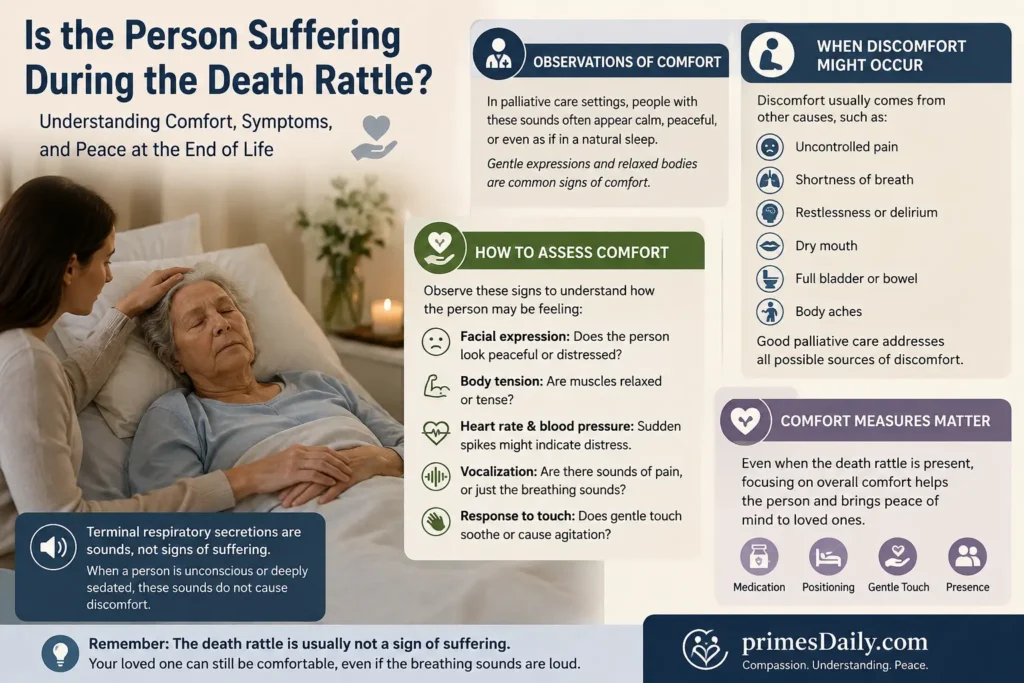
The distinction between discomfort and sounds: Terminal respiratory secretions are sounds. Sounds themselves, if you’re not conscious to hear them, don’t cause suffering. This is different from other symptoms like pain, which directly cause suffering.
Observations of comfort: In palliative care settings, staff often note that people with terminal respiratory secretions frequently appear calm, peaceful, or serene. Some appear to be in natural sleep. Some have gentle expressions. This isn’t because of the sounds—it’s because they’re usually deeply sedated, unconscious, or in a naturally altered state of consciousness.
When the person might be uncomfortable: It’s important to acknowledge that someone might be uncomfortable for reasons other than the terminal respiratory secretions. They might have:
- Uncontrolled pain: From cancer, wounds, or other sources
- Shortness of breath: From lung disease, heart conditions, or other causes
- Restlessness or delirium: From medications, metabolic changes, or other factors
- Dry mouth: From medications or decreased fluid intake
- Full bladder or bowel: From inability to communicate these needs
- Body aches: From immobility or the disease process
A good palliative care approach addresses all of these potential sources of discomfort, not just the terminal respiratory secretions.
How to assess comfort: Family members can observe:
- Facial expression: Does the person look peaceful or distressed?
- Body tension: Are muscles relaxed or tense?
- Heart rate and blood pressure: While these change near death, sudden spikes might indicate distress
- Vocalization: Does the person make sounds suggesting pain or distress, or just the breathing sounds?
- Response to touch: Does the person seem soothed by gentle touch, or do they seem agitated?
Comfort measures matter: Even when someone isn’t suffering from terminal respiratory secretions specifically, ensuring overall comfort through medication, positioning, gentle touch, and presence is important both for the person and for the family’s peace of mind.
How Is Death Rattle Managed?
Here’s where we move from understanding what’s happening to what can actually be done about it. The management approach has evolved significantly based on research and clinical experience in hospice and palliative medicine. Understanding death rattle management strategies helps families make informed decisions about end-of-life care.
First, important context: Terminal respiratory secretions are difficult to treat once they’re fully developed. Most medical interventions are only partially effective at best. This isn’t a failure of hospice care or medical professionals; it’s simply the reality of this symptom. However, there are approaches that can help with severity, and there are definitely approaches that can reduce the emotional impact on family members during this end-of-life phase.
Positioning: One of the simplest and most effective approaches is changing the person’s position. Tilting the head to the side (not straight back) helps secretions drain more easily. Elevating the head of the bed (so the person isn’t lying flat) also helps gravity work in your favor. Healthcare staff will typically position the person’s head at about a 45-degree angle, turning the head slightly to one side.
Why this works: Gravity helps secretions drain toward the esophagus and stomach rather than pooling in the back of the throat. A side-lying position is generally better than back-lying.
Gentle suctioning: Healthcare providers can use gentle suctioning of the mouth and throat to remove pooled secretions. This provides temporary relief, often reducing sounds for a period. However, suctioning can be uncomfortable for some people (especially if they’re at least partially conscious), and the secretions often rapidly re-accumulate. The decision about whether to suction is made carefully, weighing the brief benefit against potential discomfort.
Reducing fluid intake: In the dying process, reducing oral fluid intake is considered standard palliative care. Mouth care (moistening lips and mouth) is maintained, but not forcing fluid intake. Some families ask about reducing IV fluids if those are present. Discussion with the healthcare team about this is important, as sometimes IV fluids are part of comfort care and sometimes they’re unnecessarily prolonging symptoms.
Medications: Several classes of medications might be used for death rattle treatment:
- Anticholinergic medications (like glycopyrrolate or hyoscine butylbromide): These drugs reduce the production of terminal secretions. They work by blocking certain nerve signals that stimulate secretion production. Effectiveness for death rattle varies—some people see dramatic improvement, others see little change. They’re more effective when given preventatively (before terminal respiratory secretions develop) for managing dying process symptoms than when treating ones that are already established.
- Antimuscarinic agents: Similar to anticholinergics, these reduce secretion production and are often part of comfort-focused care in hospice settings and palliative medicine programs. They address some symptoms associated with the dying process, including terminal secretions.
- Drying agents: Less commonly used for death rattle treatment, these aim to dry up existing secretions. Their effectiveness in end-of-life care is limited.
- Scopolamine: A specific anticholinergic agent for terminal respiratory secretions, sometimes used in hospice and palliative care, with variable effectiveness.
Important note about medications: These are not miracle treatments for managing dying symptoms. They help some people substantially, provide mild improvement for others, and don’t help some people at all. Medical professionals use them because they’re low-risk options that sometimes improve comfort, not because they’re reliably effective for death rattle treatment.
Mouth care: Even when someone isn’t taking oral fluids, mouth care is important. Gentle moistening of lips and mouth with damp gauze or swabs can provide comfort and may slightly reduce the tendency toward secretion accumulation by keeping tissues more moist and functional.
Reassurance and communication: Don’t underestimate the power of explaining to family members what’s happening. A healthcare provider explaining, “This sound is normal at this stage of dying, he’s not aware of it, and we’re keeping him comfortable,” often does more to reduce family distress than any medication aimed at the secretions themselves. Distress among loved ones is real and deserves attention.
What doesn’t work well: Aggressive treatments like frequent suctioning, elevating the head too much (which can sometimes increase secretion problems), or giving lots of fluids generally don’t help and often make things worse.
For the latest, updated, and unique information, visit Stages Of Fasting.
Medications for Death Rattle Management
Let’s get specific about the pharmacological approach to managing terminal respiratory secretions and noisy breathing near end of life, because this is an area where informed families can have better conversations with their healthcare team about managing dying process symptoms.
Glycopyrrolate (Robinul): This is perhaps the most commonly used anticholinergic medication for death rattle treatment in hospice and palliative care settings. It works by blocking acetylcholine, which normally stimulates secretion glands responsible for terminal respiratory secretions. Typical dosing varies, and it can be given orally, IV, subcutaneously, or via other routes depending on the patient’s condition and what routes are available. Effectiveness for managing terminal secretions varies from about 20-60% reduction in death rattle symptoms in various studies of end-of-life care.
Hyoscine butylbromide (Buscopan): Another anticholinergic option, commonly used in European settings. Like glycopyrrolate, it reduces secretion production with variable effectiveness.
Atropine: A potent anticholinergic, sometimes used, though it has more side effects than newer agents.
Scopolamine (Hyoscine hydrobromide): Creates anticholinergic effect plus has sedating properties. Used in some settings, particularly when sedation is also a goal.
Timing of administration: Research from 2023-2024 studies suggests these medications are more effective when given prophylactically—that is, before terminal respiratory secretions fully develop—rather than treating ones that are already established. This has led some palliative care settings to consider giving these medications to people in very advanced dying stages as a preventive measure.
Side effects: Anticholinergic medications can cause dry mouth, constipation, urinary retention, and rarely, more serious effects. The goal is to use the minimum effective dose. In the context of end-of-life care, many side effects are considered acceptable trade-offs for reduced secretions.
Effectiveness in practice: Clinically, these medications reduce secretion-related sounds and management burdens in perhaps 50-70% of people, with varying degrees of improvement. Some people have dramatic improvement; others see little change. Factors affecting effectiveness include:
- When the medication is started (earlier is better)
- Individual variation in drug metabolism
- Concurrent medications
- Fluid status
- Overall health trajectory
The evidence base: Systematic reviews through 2024 suggest these medications have “modest evidence” for effectiveness. They’re not panaceas, but they’re reasonable options to try, particularly when terminal respiratory secretions are causing significant distress to family members or when active management seems appropriate.
Techniques to Ease Death Rattle Symptoms
Beyond medication and professional hospice care management, several physical and environmental techniques can help reduce terminal respiratory secretions and manage noisy breathing in the dying process or make them more manageable. These end-of-life comfort measures complement medical approaches to treating death rattle and can significantly improve the comfort of both the dying person and their family members.
Positioning techniques:
- Side-lying: Having the person lie on their side (rather than on their back) is one of the most effective techniques. Gravity helps secretions drain toward the esophagus.
- Head elevation: A bed adjusted so the head is higher than the body helps with drainage. The ideal angle is typically 30-45 degrees from flat, not completely upright.
- Rotating positions: Changing from one side to the other every few hours can help prevent secretions from pooling in one area and can improve overall comfort.
- The recovery position: In some cases, a modified recovery position (on the side with the head turned) is comfortable and effective.
Environmental and comfort measures:
- Humidity: Some facilities use humidified air or vaporizers to help keep airways moist and potentially improve secretion flow. The evidence for this is mixed, but it’s low-risk.
- Temperature: Keeping the person comfortable in a moderately cool (not cold) environment can be helpful.
- Quiet environment: A calm, peaceful environment with soft lighting and minimal noise helps family members manage their own distress, which indirectly benefits everyone.
- Gentle touch: Many people find comfort in gentle hand holding, head stroking, or other tactile comfort measures.
Mouth and airway care:
- Gentle oral suctioning: Light suctioning of the mouth (not deep suctioning of the throat) can remove pooled secretions from the visible mouth area. This should be done gently and only when necessary.
- Moistening: Using damp gauze or swabs to gently moisten the mouth can provide comfort and may slightly improve secretion management.
- Avoiding aggressive interventions: Aggressive suctioning, stuffing towels in the mouth, or other harsh techniques don’t help and can cause discomfort or trauma.
Hydration considerations:
- Reducing IV fluids: If IV fluids are being given, discussing with the healthcare team about whether they’re still serving a purpose is appropriate. Sometimes reducing IV fluids slightly reduces secretion accumulation.
- Careful oral hydration: If the person can still swallow, small sips of water or ice chips as desired (not forced) is appropriate.
What Families Can Do During the Death Rattle
Beyond the medical and technical management of terminal respiratory secretions and the dying process, there’s tremendous value in what families can do to support their loved one and manage their own experience during this end-of-life phase. Knowing how to respond when someone is dying with noisy breathing helps families feel more empowered and prepared.
Emotional presence and reassurance:
- Your presence matters: Simply being present with your loved one has value beyond any medical intervention. Your calm presence can be soothing.
- Talk to them: Even if someone appears unconscious, hearing is often the last sense to fade. Gentle, reassuring words can have value: “I’m here,” “It’s okay to let go,” “I love you,” or whatever feels right for your relationship.
- Reassure yourself: Remind yourself that the sounds, while distressing to hear, don’t indicate suffering on the part of your loved one.
Practical comfort measures:
- Help with positioning: Assist healthcare staff with positioning changes, or if you’re the primary caregiver, learn proper positioning techniques.
- Gentle touch: Holding a hand, stroking the forehead, or gentle back rubs can be comforting.
- Mouth care: If appropriate, you might help with gentle moistening of lips and mouth.
- Temperature comfort: Adjusting blankets, ensuring the person isn’t too hot or cold.
Communication with healthcare staff:
- Ask questions: Don’t hesitate to ask what’s happening, what the healthcare team is doing, and what you can expect.
- Express concerns: If something doesn’t feel right or seems like it could be improved, voice that.
- Discuss goals: Make sure the care being provided aligns with your loved one’s wishes and your family’s goals (comfort vs. aggressive intervention, for example).
Managing your own experience:
- Get support: Don’t try to manage this entirely alone. Hospice and palliative care teams often include counselors, social workers, or chaplains who can provide emotional support.
- Take breaks: Caring for someone at the end of life is emotionally exhausting. Taking shifts with other family members, stepping out for air, or taking time for self-care isn’t abandonment—it’s necessary.
- Journal or talk: Writing about your experience or talking with others who’ve been through this can help process emotions.
- Rituals: Some families find comfort in rituals—reading passages, playing music, saying prayers, or other meaningful practices.
What not to do:
- Don’t attempt deep throat suctioning yourself unless trained
- Don’t force fluids or food
- Don’t panic if sounds change or seem to worsen
- Don’t assume silence means death is imminent (people can linger for days in profound unconsciousness)
Communication Strategies During Death Rattle
How you communicate with your loved one and with healthcare staff during this time matters significantly.
Communication with your loved one:
If they’re conscious or partially conscious:
- Speak calmly and clearly
- Keep information simple: “You’re safe, we’re here, you’re being taken care of”
- Ask what they need, though accepting that they may not be able to respond clearly
- Avoid clinical details that might increase anxiety
If they appear unconscious:
- Assume they might still hear, even if they can’t respond
- Speak as you would if they could hear clearly
- Keep tone warm and reassuring
- Avoid upsetting conversations near the person, even if they seem unconscious
Discussing the sounds:
- You might explain: “This sound is normal at this stage. It’s not painful or uncomfortable for him”
- This can be said to the loved one and to other family members
- Explaining the physiology can reduce fear
Communication with healthcare team:
Asking the right questions:
- “What’s causing these sounds?”
- “Is he uncomfortable because of this?”
- “What are you doing to manage this, and what are the options?”
- “How long might this continue?”
- “What should I expect?”
- “What can I do to help?”
Expressing your needs:
- “I’m finding the sounds distressing” (they may have suggestions)
- “I need more information about what’s normal here”
- “I’d like to try [specific intervention]”
Understanding their response:
- Respect that healthcare professionals have seen this many times and can often predict patterns
- Understand that medical interventions have limitations
- Accept that they may recommend comfort-focused care rather than aggressive treatment
Involving other family:
Preparing them:
- Explain what sounds they might hear
- Explain that it doesn’t indicate suffering
- Explain the medical rationale for the approach
Managing disagreements:
- Some family members may panic and want aggressive intervention
- Others may be more accepting
- A family meeting with healthcare staff can help align everyone’s understanding
Creating shared understanding:
- Sometimes the healthcare team can explain in a way that different family members can accept
- Allowing time for questions from everyone helps
Emotional Impact of Death Rattle on Caregivers
This aspect is rarely discussed adequately, but it’s profoundly important: terminal respiratory secretions and noisy breathing when someone is dying can have significant emotional impact on family members and caregivers witnessing the end-of-life process. Understanding the emotional toll of witnessing death rattle symptoms helps normalize caregiver distress and highlights the importance of family support during this dying phase.
Why death rattle and terminal respiratory secretions are so distressing:
The sounds of death rattle and terminal respiratory secretions can trigger deep fear and sadness for several reasons:
- Unfamiliar sounds: Most people have never heard noisy breathing or terminal respiratory secretions before. The unfamiliarity with these death rattle sounds makes them seem more alarming.
- Association with choking: The sounds remind many people of choking or drowning, which feel like active suffering during the dying process.
- Reminder of mortality: Hearing death rattle sounds and witnessing the dying process is a visceral reminder that someone you love is dying.
- Sense of helplessness: Watching someone in this state and feeling unable to fix it creates emotional stress.
- Guilt and second-guessing: Family members sometimes worry they’re not doing enough or that they’re allowing something to happen that’s causing suffering.
- Trauma from previous experiences: If someone has previously witnessed death with terminal respiratory secretions, they may be re-traumatized.
Common emotional responses:
- Fear: “Is he suffering?”
- Sadness and grief: The reality that someone is dying is visceral and painful
- Guilt: “Should I be doing something different?”
- Exhaustion: Watching someone die is emotionally and physically exhausting
- Anger: “Why is this happening? Why can’t we fix this?”
- Numbness or detachment: Some people cope by disconnecting emotionally
- Relief: Especially after a long illness, some feel relief that suffering is ending
- Complicated mixture: Often people feel multiple contradictory emotions simultaneously
Impact on different types of caregivers:
- Spouses: May experience anticipatory grief combined with practical stress of caregiving
- Adult children: May feel responsibility to “do right” by their parent while managing their own grief
- Younger family members: May be experiencing their first confrontation with death
- Professional caregivers: May experience “compassion fatigue” from repeated exposure
Long-term effects:
For some people, witnessing terminal respiratory secretions contributes to complicated grief or post-traumatic stress. For others, it becomes a meaningful part of being present with their loved one at the end of life. Much depends on the context, support available, and individual resilience.
Support strategies for caregivers:
- Validation: Acknowledge that these sounds are genuinely distressing to witness
- Information: Understanding what’s happening reduces catastrophic thinking
- Reassurance: Clear explanation that the person isn’t suffering from the sounds
- Professional support: Counselors, spiritual care providers, and support groups
- Practical support: Help with logistics, meals, other family members
- Permission to step back: It’s okay to take breaks, leave the room, get support
- Meaning-making: Some find value in reflecting on this as a privilege to be present, though this shouldn’t be forced
Signs Death Rattle is Ending
As death approaches more closely, you might notice changes in the terminal respiratory secretions or related symptoms. Understanding these changes can help you know what to expect.
Reduced volume: The sounds might become quieter. This can sometimes indicate that death is very close—the person’s breathing is becoming shallower, so there’s less airflow and therefore less sound production, even if secretions are still present.
Changes in frequency: The sounds might become less constant—longer periods of quieter breathing interspersed with periods of noisy breathing.
Changes in pattern: The rhythm of the breathing might change. Some people develop more irregular patterns (like Cheyne-Stokes respirations—periods of deep breathing alternating with shallow breathing or pauses) as death approaches.
Clearing of secretions: Sometimes just before death, the person’s body seems to clear secretions, leading to quieter breathing. This doesn’t mean recovery is happening; it can actually be a sign of imminent death.
Color changes: The person’s skin might become more pale, mottled (patchy), or take on a bluish tint as circulation slows.
Temperature changes: Extremities might become cold as blood circulation decreases.
Decreased responsiveness: If the person has had any responsiveness, this typically decreases as death approaches.
Changes in breathing pattern: Finally, breathing might become more irregular, with longer pauses between breaths. Agonal breathing (gasping) might occur in the very final moments.
After death: Breathing stops. Sometimes people make a final sound—a last breath or sigh. Some describe this as peaceful; others find it startling.
Important context: These signs don’t necessarily happen in order, and not everyone experiences all of them. They’re general patterns rather than rules.
Other Signs That May Appear Near the End of Life
Terminal respiratory secretions rarely appear in isolation. Understanding other signs of the dying process, including changes in breathing and consciousness, helps you see the bigger picture and understand what’s happening during the final stages of life. Recognizing when someone is dying involves looking at multiple end-of-life signs together, not just the noisy breathing or terminal respiratory secretions alone.
Changes in consciousness:
- Increasing sleepiness or difficulty waking
- Eventually, complete unconsciousness
- Possible delirium or confusion (sometimes called terminal delirium)
- Dreams or hallucinations (not necessarily distressing)
Changes in responsiveness:
- Difficulty opening eyes
- No response to verbal stimuli
- Possible minimal response to physical stimuli
- Loss of ability to speak clearly or at all
Changes in sensation:
- Possible loss of vision (eyes may be open but not seeing)
- Possible loss of hearing (though hearing is often retained longer)
- Reduced ability to feel pain, though sensation to comfort (touch) might persist
Changes in eating and drinking:
- Gradual loss of appetite and thirst (completely normal)
- Difficulty swallowing
- Complete inability to swallow
- This is natural and not a sign of immediate danger
Changes in elimination:
- Decreased urination
- Possible incontinence as voluntary control is lost
- Changes in bowel function
Changes in circulation:
- Skin becoming pale, cool, or mottled
- Bluish tint to extremities (cyanosis)
- Weak or irregular pulse
- Fluctuating blood pressure
Changes in breathing:
- Irregular patterns
- Periods of rapid breathing alternating with slow breathing
- Periods where breathing seems to stop (apnea)
- Terminal respiratory secretions
Changes in skin appearance:
- Increased transparency or thin appearance
- Loss of elasticity
- Development of pressure ulcers in areas of constant contact with bed
Changes in temperature regulation:
- Fluctuations between feeling hot and cold to the touch
- Sweating or feeling clammy
- Person may not be able to communicate temperature discomfort
Behavioral changes (if partially conscious):
- Restlessness or agitation
- Possible meaningful words or phrases
- Possible “reaching” or picking at the air or blankets
- Possible vocalization (groaning, but not necessarily indicating pain)
Changes in skin color:
- Flushed or pale
- Blotchy appearance
- Cyanosis (bluish tint)
Understanding these together: These signs typically appear in clusters. Someone showing many of these signs simultaneously is in a very advanced stage of dying. The presence of terminal respiratory secretions combined with several other signs indicates death is likely quite close—usually days rather than weeks, though individual variation exists.
Previous Experiences with Death Rattle
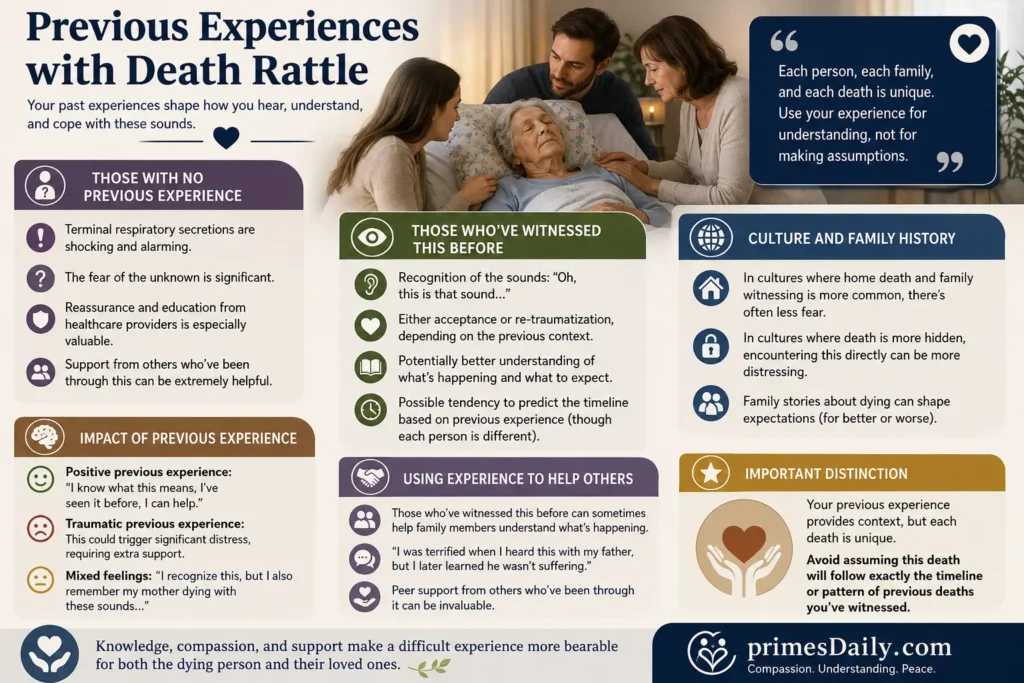
Your previous experiences with dying and death profoundly shape how you experience these sounds.
Those with no previous experience:
- Terminal respiratory secretions are shocking and alarming
- The fear of the unknown is significant
- Reassurance and education from healthcare providers is especially valuable
- Support from others who’ve been through this can be extremely helpful
Those who’ve witnessed this before:
- Recognition of the sounds: “Oh, this is that sound…”
- Either acceptance or re-traumatization, depending on the previous context
- Potentially better understanding of what’s happening and what to expect
- Possible tendency to predict the timeline based on previous experience (though each person is different)
Culture and family history:
- In cultures where home death and family witnessing is more common, there’s often less fear
- In cultures where death is more hidden, encountering this directly can be more distressing
- Family stories about dying can shape expectations (for better or worse)
Impact of previous experience:
- Positive previous experience: “I know what this means, I’ve seen it before, I can help”
- Traumatic previous experience: This could trigger significant distress, requiring extra support
- Mixed feelings: “I recognize this, but I also remember my mother dying with these sounds…”
Using experience to help others:
- Those who’ve witnessed this before can sometimes help family members understand what’s happening
- “I was terrified when I heard this with my father, but I later learned he wasn’t suffering”
- Peer support from others who’ve been through it can be invaluable
Important distinction: Your previous experience provides context, but each death is unique. Avoid assuming this death will follow exactly the timeline or pattern of previous deaths you’ve witnessed.
When to Contact Hospice or Palliative Care
Terminal respiratory secretions and noisy breathing near the end of life aren’t necessarily an indication that someone needs hospice care, but they do indicate advanced dying. Understanding when professional palliative support and hospice care becomes important can help you access the resources that make this final phase better. Knowing when someone is dying and recognizing end-of-life signs helps guide the timing of hospice enrollment.
When terminal respiratory secretions might prompt hospice discussion:
- If the person hasn’t yet enrolled in hospice but is showing clear signs of dying (including terminal respiratory secretions and breathing changes)
- If current care isn’t adequately addressing comfort during the dying process
- If family members are overwhelmed and need professional end-of-life support
- If there are questions about what’s happening during the final stages of life and what to expect
What hospice and palliative care provide during end-of-life:
- Medical management: Doctors and nurses experienced in managing the dying process and end-of-life care
- Medication management: Expertise in comfort medications and symptom management, including death rattle treatment
- Support services: Counseling, spiritual care, social work support for families facing death
- Practical help: Equipment, supplies, help with hygiene care for the dying
- Education: Explaining the dying process and what to expect when someone is dying
- 24/7 availability: Most hospice agencies have phone support available around the clock for end-of-life emergencies
- Family support: Not just for the dying person, but for family members navigating the final stages
- Bereavement support: Professional support continuing after the person dies
Timing considerations:
- Ideally, people transition to hospice when curative treatment is no longer the goal and comfort becomes the primary focus
- This might be weeks before death, or it might be days before
- There’s no perfect timing, but earlier enrollment generally allows more time to establish relationships and plan care
- Some people enroll in hospice and then live longer than expected; this is fine and doesn’t mean they should have continued other treatments
Having the conversation:
- With your medical team: “I’m worried about how to manage this. Would hospice care be appropriate?”
- “I want to make sure comfort is the priority. What services could help?”
- “We’re feeling overwhelmed. Are there resources to support us?”
Accessing services:
- Your doctor can write an order for hospice evaluation
- You can contact hospice agencies directly
- Your hospital’s social work department can help coordinate
- Palliative care specialists (different from hospice, but similar philosophy) can help even if hospice isn’t yet appropriate
Continuing comfort-focused care:
Whether through formal hospice or palliative care, or through aggressive comfort-focused medical management in hospitals or facilities, the key is that terminal respiratory secretions should prompt a focus on comfort, quality of life, and meaning-making rather than on trying to reverse the dying process.
Cultural and Spiritual Perspectives on Death Rattle
Death practices and perspectives vary tremendously across cultures and spiritual traditions. Understanding diverse perspectives on this symptom and on dying can enrich your understanding.
Western medical perspective:
Frames terminal respiratory secretions as a symptom to be managed, a sign of dying, something requiring explanation and, potentially, medical intervention.
Some Asian perspectives:
In many Asian cultures, dying at home surrounded by family is valued. Terminal respiratory secretions might be understood as a natural part of the journey, with less emphasis on medical intervention and more on family presence and ritual.
Indigenous perspectives:
Many indigenous traditions view dying as a spiritual transition as much as a physical process. The sounds might be understood in spiritual terms as well as physical. Family involvement and ceremonial practices are often central.
Religious perspectives:
- Christian traditions: Dying is often viewed as a transition to the next life. Some emphasize suffering redemption; others emphasize peaceful passage. Chaplains and spiritual leaders can support the dying person and family.
- Jewish traditions: End-of-life care has specific guidelines. Terminal respiratory secretions might be managed according to particular practices around sustaining life versus allowing natural death.
- Muslim traditions: Certain prayers and practices are important. Privacy and family support in prayer is valued. Understanding appropriate care according to Islamic principles is important.
- Buddhist perspectives: Dying is part of the cycle of life and rebirth. Maintaining mental clarity and peace during dying is valued. Meditation and mindfulness practices might be part of care.
- Hindu traditions: Beliefs about karma and reincarnation shape perspectives on dying. Family involvement, certain rituals, and sometimes specific practices around the time of death are important.
Secular and humanistic perspectives:
Emphasize quality of remaining life, meaning-making, and natural process. May involve specific rituals or practices meaningful to the individual without religious framework.
Respecting diverse perspectives:
In multicultural societies, healthcare providers increasingly seek to understand and respect diverse approaches to dying. This might mean:
- Asking about cultural or spiritual practices that are important
- Involving spiritual leaders or community members as appropriate
- Adapting medical care to align with cultural values when possible
- Recognizing that beliefs about terminal respiratory secretions specifically might vary
Finding meaning:
Regardless of cultural or spiritual background, many people find meaning in this time:
- Being present with someone in their final journey
- Fulfilling cultural or spiritual obligations
- Expressing love and saying goodbye
- Creating memory and ritual
- Understanding this as part of the cycle of life
Clinical Implications and Future Research on Death Rattle
The landscape of how terminal respiratory secretions are understood and managed continues to evolve. Understanding current research and future directions can help you have more informed conversations with healthcare providers.
Current research focus (2023-2025):
- Prophylactic medication trials: Research into whether giving anticholinergic medications before terminal respiratory secretions develop (rather than after) could prevent or reduce them
- Communication studies: Research examining how to best communicate about this symptom with families to reduce distress
- Variant management approaches: Studies comparing different management strategies
- Quality of life: Increasing focus on what actually improves end-of-life quality for both patients and families
Evidence gaps:
- We still don’t have excellent predictors of which people will develop terminal respiratory secretions
- We don’t fully understand individual variation in response to medications
- We need better understanding of what actually reduces family distress most effectively
Emerging understandings:
- Focus on family: Increasingly, research recognizes that terminal respiratory secretions affect families more than patients
- Individualized approach: Rather than one-size-fits-all management, more personalized approaches based on individual circumstances, values, and goals
- Communication value: The value of clear communication and education in reducing family distress is becoming better appreciated
- Multi-symptom approach: Managing terminal respiratory secretions as part of comprehensive end-of-life care rather than as an isolated symptom
Future directions:
- Better predictive models to identify who will develop terminal respiratory secretions
- Novel medications or approaches that might be more effective
- Better training for healthcare providers in discussing and managing this symptom
- Integration of family support and counseling as routine part of end-of-life care
- Research in diverse populations (current research is somewhat limited to Western, developed countries)
What this means for you:
- Standards of care continue to evolve based on research
- Your healthcare team’s approach might reflect the latest evidence
- It’s reasonable to ask about what evidence supports recommended approaches
- Clinical guidelines increasingly emphasize comfort and family support rather than aggressive treatment of terminal respiratory secretions
FAQs
Q: Is the death rattle a sign that death is imminent?
A: Terminal respiratory secretions and noisy breathing are indeed signs that someone is in an advanced stage of the dying process. However, they don’t necessarily mean death is happening in the next hours. Some people develop these terminal secretions and then live for several more days. Others die within hours of the sounds beginning when someone is dying. It’s a sign of advanced dying without being a precise predictor of timing.
Q: Can the death rattle be completely prevented?
A: Complete prevention of terminal respiratory secretions is difficult. However, some strategies might help reduce the risk or severity in the dying process. Prophylactic anticholinergic medications for managing death rattle, careful fluid management, and other end-of-life measures show promise, but they don’t work for everyone. The best approach is to focus on comfort and management if it does develop rather than on trying to prevent it entirely.
Q: Should we be trying to treat the death rattle aggressively?
A: This depends on the individual circumstances and goals for end-of-life care. If the person is comfortable and the terminal respiratory secretions aren’t causing significant distress during the dying process, aggressive treatment may not be warranted. If the sounds are very disturbing to family members or if the person seems uncomfortable, gentle management strategies for death rattle are appropriate. Aggressive interventions like frequent suctioning usually don’t help and can cause discomfort.
Q: Does everyone die with the death rattle?
A: No. Some people die without developing terminal respiratory secretions or noisy breathing. Others have very minimal sounds during the dying process. Having or not having death rattle symptoms doesn’t indicate anything about the quality of the person’s death or their level of suffering at the end of life.
Q: What should I do if I hear the death rattle?
A: First, reassure yourself that the person likely isn’t aware of the sound or suffering from it. Let healthcare staff know the noisy breathing or terminal respiratory secretions are occurring so they can assess and possibly adjust end-of-life care. Comfort measures like positioning changes, reassuring words to your loved one, and support for yourself are all appropriate during this time when someone is dying.
Q: How long can someone live with the death rattle?
A: This varies tremendously. Most commonly, terminal respiratory secretions persist for hours to a few days before death occurs, but some people have noisy breathing for longer during the dying process. It’s not predictive of precise timing for how long someone will live after developing these symptoms.
Q: Is it wrong to want to reduce these sounds?
A: No. It’s completely reasonable to want to reduce death rattle sounds that are distressing to hear during the dying process. Gentle, comfort-focused interventions for managing terminal respiratory secretions are appropriate. Aggressive interventions that cause discomfort aren’t recommended, but reasonable end-of-life comfort measures are fine.
Q: Should we stop giving fluids to reduce the death rattle?
A: This is a nuanced medical decision in end-of-life care. Reducing unnecessary IV fluids is often part of comfort-focused care when someone is dying, but oral comfort (small sips, mouth moistening) is usually maintained. This should be discussed with your hospice or palliative care team in the context of your loved one’s overall goals during the final stages of life.
Q: Can I stay in the room while the death rattle is happening?
A: Yes. Your presence can be comforting to your loved one even if they seem unconscious during the dying process with noisy breathing. However, you can also step out if you need to. Taking care of yourself emotionally and physically is important when you’re witnessing end-of-life symptoms—you won’t help your loved one if you’re completely overwhelmed.
Q: What if the death rattle sounds are making me extremely distressed?
A: Speak with your hospice or healthcare staff about your distress. Options might include: more explanation about terminal respiratory secretions and the dying process, brief steps out of the room, exploring comfort measures for the patient that might reduce sounds, or emotional support for you through counseling or support groups. Your distress is valid and worth addressing during this end-of-life phase.
Q: Does using anticholinergic medication for death rattle mean we’re hastening death?
A: No. Anticholinergic medications and other approaches to managing terminal respiratory secretions reduce secretion production; they don’t affect the dying process or hasten death. Death rattle treatment through these medications is used to improve comfort during end-of-life care, not to end life.
Q: What if nothing seems to be helping with the death rattle?
A: Sometimes, despite best efforts, terminal respiratory secretions persist and noisy breathing remains audible during the dying process. The focus then shifts to ensuring the person is comfortable, ensuring family has adequate support and understanding about what’s normal in end-of-life care, and accepting this as part of the natural dying process. No intervention for managing death rattle is 100% effective, and that’s okay.
Q: How will we know when death is very close?
A: Multiple signs together (not just terminal respiratory secretions and noisy breathing) indicate imminent death: reduced consciousness, irregular breathing patterns, color changes, weakening pulse, declining temperature, no longer taking food or fluids. Your healthcare team in hospice or palliative care can help assess how close death is when someone is dying, though precise prediction isn’t possible.
Q: Is it normal to feel relief when this ends?
A: Yes. You might feel relief that your loved one’s suffering is over, relief that your own burden of watching is ending, or both. This doesn’t mean you didn’t love them or that you’re a bad person. These feelings are normal.
Q: What grief support is available after?
A: Hospice agencies often provide bereavement support for months after death. Grief counselors, support groups, and spiritual advisors can all help. Additionally, talking with others who’ve experienced similar losses can be valuable.
Conclusion
Terminal respiratory secretions—the sounds commonly known as noisy breathing or death rattle that describes them—are one of the most characteristic and often most distressing signs of approaching death. Yet as we’ve explored throughout this guide, what seems alarming is often a natural part of the dying process that doesn’t indicate suffering on the part of the person dying, even as it causes distress for those who love them. Understanding what death rattle means and recognizing it as part of the dying process helps families approach this end-of-life symptom with greater peace.
The journey toward understanding this phenomenon is really a journey toward understanding death itself and the dying process. In cultures and times where death was more visible and commonplace, families expected certain signs and sounds when someone is dying. In modern times, where death is often hidden away in institutions, encountering these terminal respiratory secretions can feel shocking and frightening.
For the latest, updated, and unique information, visit Accutane Purge.