
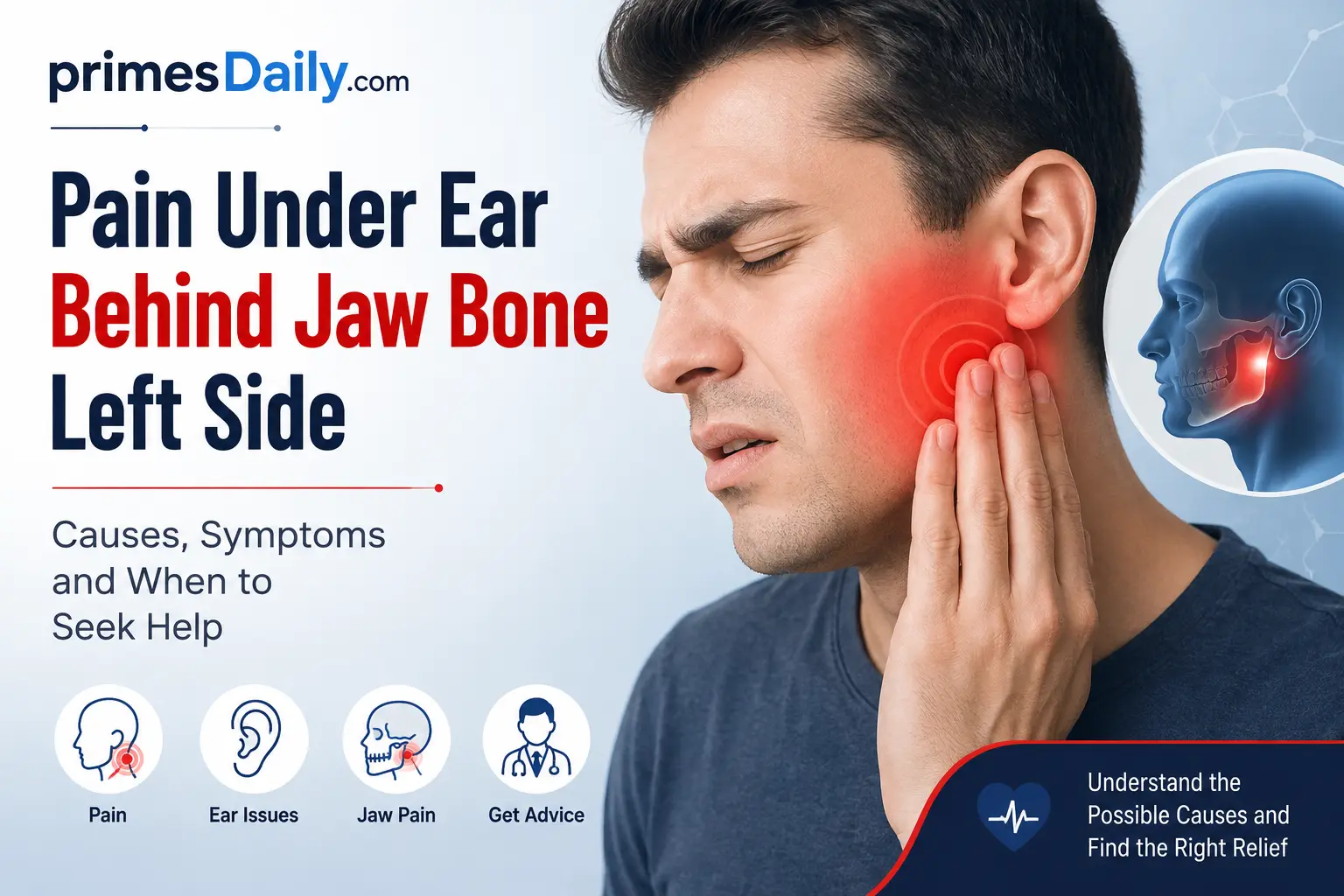
You press two fingers just below your left ear, right where the jaw meets the skull, and there it is again — a dull ache that wasn’t there yesterday. Is it your tooth? Your ear? Something to do with stress? Pain under ear behind jaw bone left side is one of those symptoms that feels small until it starts interrupting your sleep, your meals, or your ability to turn your head without wincing.
The area under the ear and behind the jaw is crowded real estate. Muscles, nerves, lymph nodes, salivary glands, and the jaw joint itself are all packed into a few square inches, which is exactly why pinpointing the source without guidance is so tricky. A problem in any one of these structures can radiate outward until it feels like the whole side of your face is involved.
This guide walks through every major cause of pain under ear behind jaw bone left side, how each one typically feels, when home care is enough, and when it’s time to get evaluated. Nothing here is meant to replace a proper exam, but by the end, you should have a much clearer picture of what might be going on and what to do next.
What Causes Pain Under Ear Behind Jaw Bone Left Side?
In most cases, this kind of localized discomfort traces back to one of three general categories: a joint or muscle problem (most commonly the temporomandibular joint), an infection somewhere nearby (ear, tooth, gland, or lymph node), or referred pain from a completely different part of the body. Left-sided pain isn’t inherently more dangerous than right-sided pain in the vast majority of cases, but there’s one notable exception involving the heart that’s worth knowing about, which we’ll cover further down.
What makes this symptom confusing is that the exact same nerve pathways serve the ear, the jaw, and the upper neck. Your brain sometimes struggles to tell these signals apart, so a problem that starts in your tooth can feel like it’s coming from your ear, and vice versa.
Common Causes of Pain Behind the Jaw and Under the Ear
Before diving into each condition individually, here’s a quick overview of what typically drives this symptom:
- Jaw joint dysfunction (most frequent cause in adults)
- Nighttime teeth grinding or clenching
- Middle or outer ear infection
- A reactive, swollen lymph node
- A blocked or infected salivary gland
- An abscessed or infected tooth
- An impacted or erupting wisdom tooth
- Sinus inflammation
- Migraine
Each of these has its own pattern of symptoms, and learning to recognize that pattern is often the fastest way to figure out where to start.
TMJ Disorder and Left-Side Jaw-Ear Pain
The temporomandibular joint sits directly in front of the ear canal on each side of your face, acting as the hinge that lets you talk, chew, and yawn. When this joint becomes inflamed, misaligned, or mechanically irritated, the resulting ache is almost always felt more on one side than the other — which explains why so many people search specifically for left-side symptoms rather than general jaw pain.
What does this actually feel like day to day? Usually a dull, aching soreness directly in front of or just below the ear that gets worse when you chew tough food, yawn widely, or talk for long periods. Some people also notice a clicking, popping, or grinding sensation when opening the mouth, along with stiffness first thing in the morning.
Joint dysfunction of this kind can be triggered by:
- Stress-related muscle tension
- A previous jaw injury
- Arthritis affecting the joint
- Structural misalignment of the bite
- Chronic teeth grinding
Because the joint sits so close to the ear canal, pain here is frequently mistaken for an ear infection, which is one reason a proper evaluation matters before assuming the worst.
Bruxism (Teeth Grinding) as a Hidden Trigger
Grinding or clenching your teeth during sleep is one of the most underdiagnosed contributors to this type of pain, largely because most people have no idea they’re doing it. Roughly one in ten adults grinds their teeth regularly, and the habit rarely distributes force evenly across the jaw — most people grind harder on one side, which is why the resulting soreness so often shows up as one-sided rather than symmetrical.
Here’s a question worth asking yourself: does the ache feel worst right when you wake up and slowly ease off during the day? That pattern is a strong signal that nighttime grinding is involved rather than an active infection, which tends to stay constant or worsen throughout the day.
Other clues that point toward grinding include:
- A partner mentioning grinding noises at night
- Flattened or worn edges on your back teeth
- Increased sensitivity to cold on multiple teeth at once
- Frequent tension headaches centered at the temples
- Notching near the gumline on the more heavily used side
A custom-fitted night guard is the standard first-line solution, and most people notice meaningful improvement within a few weeks of consistent use.
Ear Infection and Referred Pain to the Jaw
Because the ear canal, middle ear, and jaw joint sit so close together and share overlapping nerve supply, an infection in either the outer ear canal or the middle ear space can easily be felt as jaw pain rather than ear pain. This is called referred pain, and it’s a genuinely common source of confusion.
Signs that an ear infection may be the real culprit include a sensation of fullness or blockage in the ear, muffled hearing, fluid drainage, fever, or noticeable pain when you gently tug on the earlobe. Middle ear infections are especially common after a cold or upper respiratory illness, when fluid builds up behind the eardrum and creates pressure.
If ear-specific symptoms are present alongside the jaw discomfort, that combination usually points away from a purely dental or joint-related cause.
Swollen Lymph Node Under the Jaw
Several lymph nodes sit directly beneath the jawline and under the ear, and their job is to filter out infection-fighting cells. When your body is dealing with a cold, a throat infection, a dental infection, or even a minor scalp irritation, these nodes can swell and become tender almost overnight.
A swollen node typically feels like a small, movable lump under the skin rather than a deep ache within the joint itself. It’s usually tender to direct touch, and it tends to shrink back down on its own as the underlying illness resolves over one to two weeks.
Persistent swelling that doesn’t shrink, that keeps growing, or that feels hard and fixed in place rather than soft and movable is a different story and deserves a proper look rather than a wait-and-see approach.
Salivary Gland Problems Causing Jaw-Ear Pain
The parotid gland, your largest salivary gland, sits almost directly beneath the ear and drains saliva into the mouth through a narrow duct. When that duct gets blocked by a small mineral deposit, or when the gland itself becomes infected, the swelling and pain can be significant, and it often gets noticeably worse right around mealtimes.
That timing detail matters more than people realize. Why would pain spike specifically when you start eating? Because chewing triggers a surge of saliva production, and if the outflow is blocked, pressure builds rapidly inside the gland. If your discomfort follows that exact pattern — quiet between meals, sharp during or right after eating — a salivary gland issue should be high on your list of suspects.
Other signs include a dry or unpleasant taste in the mouth, visible swelling along the jawline, and in more advanced cases, fever. These conditions are more common in people who are dehydrated, have poor oral hygiene, or take medications that reduce saliva flow.
Dental Abscess or Tooth Infection
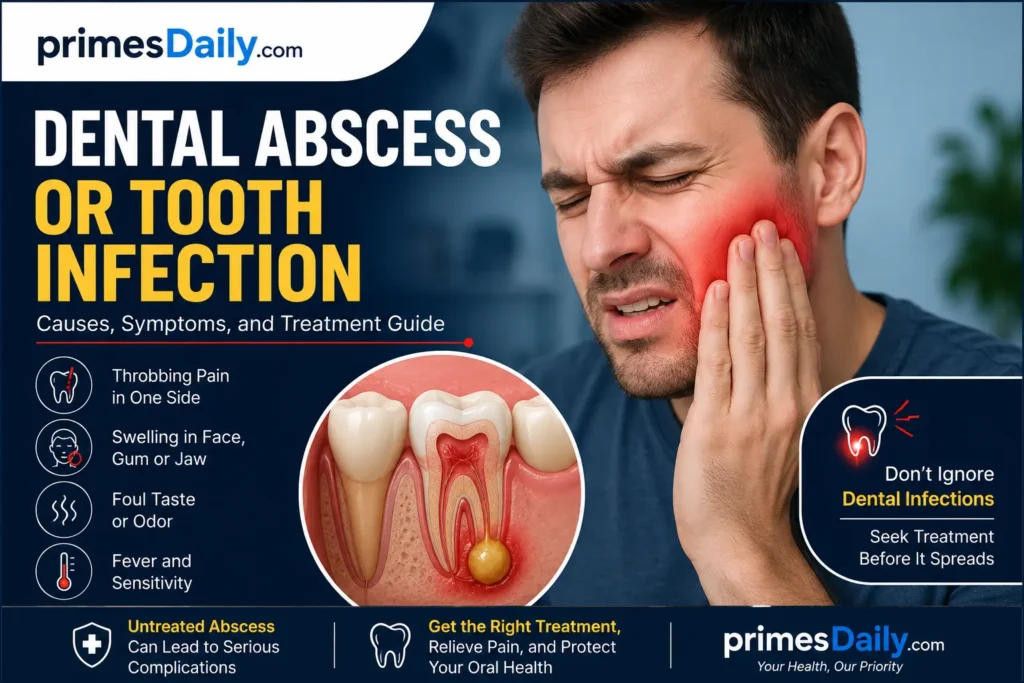
An abscess is a pocket of infection that forms either inside a tooth or in the surrounding gum tissue, and it produces one of the more intense versions of this pain pattern. Because the infection is confined to one specific point, the discomfort is inherently one-sided and tends to be throbbing rather than dull.
Watch for these accompanying signs:
- Constant, pulsing pain rather than pain that comes and goes with movement
- Visible swelling of the face, gum, or jaw
- A persistent foul taste or odor
- Sharp sensitivity to hot or cold that lingers well after the trigger is removed
- Fever, which signals the infection may be spreading
Left untreated, a dental abscess can spread into surrounding tissue and become a genuine medical emergency, so this is one cause where prompt professional treatment isn’t optional.
Wisdom Tooth Pain Radiating to the Ear
Third molars, better known as wisdom teeth, sit at the very back of the jaw and are notorious for causing referred discomfort toward the ear. This happens whether the tooth is impacted (unable to fully emerge), partially erupted with a flap of gum tissue trapping bacteria, or fully erupted but difficult to clean properly.
People in their late teens through thirties are most likely to experience this, and the discomfort often has a pressure-like quality rather than the sharp, isolated pain of a cavity. If you’re noticing soreness at the very back of your jaw that seems to travel upward toward the ear, particularly with some swelling of the surrounding gum, a wisdom tooth issue is worth ruling out.
For the latest, updated, and unique information, visit Death Rattle.
Sinus Congestion and Sinusitis Link
The maxillary sinuses sit just above your upper back teeth, and when they become inflamed from a cold, allergies, or a sinus infection, the pressure can radiate downward into the jaw and up toward the ear. This is usually worse when bending forward or lying down, since gravity shifts the fluid pressure within the sinus cavity.
Congestion, thick nasal discharge, facial pressure across the cheeks, and a reduced sense of smell alongside the jaw discomfort all point toward a sinus origin rather than a dental or joint problem.
Migraine and Jaw-Ear Discomfort
Migraine attacks don’t stay confined to the head. Because of shared nerve pathways, the pain of a migraine can extend into the jaw and ear region on one side, sometimes before the more classic headache symptoms even show up. If your jaw pain arrives with light sensitivity, nausea, or a throbbing quality that matches previous migraine episodes, this connection is worth considering.
Less Common but Serious Causes to Watch For
Most causes of this symptom are manageable and not urgent. A smaller number are not, and knowing the difference matters.
Mastoiditis: A Warning Sign Behind the Ear
Mastoiditis is an infection of the bone directly behind the ear, and it almost always develops as a complication of an untreated or inadequately treated ear infection. It’s uncommon, but it’s serious enough that it shouldn’t be missed.
Red flags include swelling and redness specifically behind the ear (not just around it), the ear appearing pushed slightly forward, fever, and worsening hearing loss on the affected side. This condition needs prompt medical evaluation, typically involving antibiotics and sometimes drainage or surgery.
Osteoarthritis and Rheumatoid Arthritis in the Jaw Joint
Just like any other joint in the body, the temporomandibular joint can be affected by wear-and-tear arthritis or by autoimmune forms like rheumatoid or psoriatic arthritis. Osteoarthritis tends to develop gradually with stiffness and grinding sensations, while autoimmune arthritis often flares unpredictably and may affect other joints in the body at the same time.
Jaw Dislocation and Sudden Pain Under the Ear
A sudden, sharp episode of pain accompanied by the jaw feeling stuck open or visibly out of alignment is a different situation entirely from the gradual soreness described above. This usually follows a wide yawn, an injury, or excessive jaw movement, and it requires prompt repositioning by a medical professional rather than home management.
Why Does This Pain Occur Only on the Left Side?
This is one of the most common questions people ask, and the honest answer is that most of the causes above are simply asymmetrical by nature. Teeth grinding rarely applies equal force to both sides. An infected tooth or blocked salivary duct affects one specific location. A TMJ flare-up is frequently triggered by chewing habits that favor one side over the other. In other words, one-sided symptoms are the expected pattern for the vast majority of causes, not an unusual red flag on their own.
There is one important exception. In adults, particularly those over 40 and especially in women, left-sided jaw discomfort can occasionally be a referred symptom of a cardiac event. This is far less common than the dental and joint-related causes above, but it becomes a genuine emergency when the jaw pain shows up together with chest pressure, shortness of breath, pain radiating down the left arm, nausea, or sweating. That specific combination calls for immediate emergency care, not a wait-and-see approach.
What Does Pain Under the Ear Behind the Jaw Feel Like?
The character of the discomfort itself offers real diagnostic clues. A dull, aching soreness that builds gradually and worsens with chewing usually points toward the jaw joint or muscle tension. A throbbing, constant pain that keeps you up at night is more typical of an infection, whether dental, glandular, or related to the ear. A sharp, electric, come-and-go pain triggered by specific movements often suggests a cracked tooth or, less commonly, nerve-related pain. Pressure-like discomfort that worsens when you bend forward usually traces back to the sinuses.
Paying attention to exactly when the pain shows up — during meals, first thing in the morning, when lying down, or seemingly at random — narrows the list of likely causes considerably before you even see a provider.
How Head Posture Affects Jaw and Ear Pain
Forward head posture, the kind that develops from hours spent looking down at a phone or hunched over a laptop, places extra strain on the muscles that support the jaw and neck. Over time, this shifts how the jaw joint sits and functions, often making one side work harder than the other. People who spend long stretches of the day in this posture frequently notice their jaw-and-ear discomfort intensifying by evening, even without any grinding or dental issue involved.
Simple adjustments — raising your screen to eye level, taking regular breaks to reset your posture, and doing gentle chin-tuck exercises — can meaningfully reduce this kind of mechanical strain over a few weeks.
Why You Might Wake Up With Jaw Pain Under the Ear
Morning soreness in this exact location is one of the clearest signals of nighttime grinding or clenching. Your jaw muscles have been under sustained, repetitive load for hours while you sleep, which produces the same kind of ache any overworked muscle would after prolonged use. This soreness typically peaks right after waking and gradually eases as the day goes on, which is a helpful distinguishing feature from infection-related pain that tends to stay constant or worsen.
Sleep position can compound the problem. Sleeping consistently on one side with your jaw pressed into the pillow adds mechanical pressure directly to the joint, which can intensify morning symptoms on that same side.
Understanding Jaw Sounds: Clicking, Popping, and Locking
A clicking or popping sound when opening or closing your mouth often indicates that the small disc inside the jaw joint has shifted slightly out of its normal position. On its own, this sound isn’t necessarily dangerous — plenty of people have painless clicking for years. It becomes more significant when it’s accompanied by pain, by a sensation of the jaw briefly catching or locking, or by a noticeable reduction in how wide you can open your mouth.
A grinding or grating sensation, sometimes described as feeling like sand in the joint, tends to indicate more advanced wear on the joint surfaces and is worth having evaluated even in the absence of significant pain.
How One Symptom Can Lead to Another (The Domino Effect)
Jaw problems rarely stay isolated. Chronic clenching leads to muscle fatigue, which changes how you chew, which shifts extra pressure onto teeth that weren’t designed to handle it, which can eventually lead to cracking or sensitivity. Ongoing joint inflammation can tighten the surrounding neck muscles, which contributes to tension headaches. A single untreated cause, left alone long enough, tends to recruit nearby structures into the problem, which is part of why earlier evaluation generally leads to a simpler, faster resolution than waiting things out.
How Is Pain Under the Ear Behind the Jaw Diagnosed?
A proper diagnosis usually starts with a detailed conversation about when the pain started, what makes it better or worse, and whether it’s tied to eating, waking up, or specific movements. From there, a clinician will typically examine jaw range of motion, listen for joint sounds, check the lymph nodes and salivary glands for swelling, and look inside the mouth for signs of dental infection or wear from grinding.
Depending on what the exam reveals, additional tests might include:
- Dental X-rays or a panoramic image to check tooth and bone health
- A CT scan or MRI for detailed imaging of the joint itself
- Ultrasound if a salivary gland problem is suspected
- Blood tests if an infection or inflammatory arthritis is a possibility
Bringing a clear timeline of your symptoms to the appointment — when it started, what triggers it, and whether it’s improving or worsening — genuinely speeds up an accurate diagnosis.
When Home Remedies Are Enough vs When They’re Not
Mild, recent discomfort without fever, swelling, or restricted jaw movement is generally safe to manage at home for several days while you monitor it. If it’s improving, that’s a good sign. If it stays flat or worsens after roughly a week of consistent home care, or if it was severe from the start, that’s the point to stop self-treating and get it looked at.
Certain symptoms should skip the home-care phase entirely and prompt faster evaluation: a fever alongside the pain, swelling that’s visibly increasing or feels hot to the touch, real difficulty opening your mouth or swallowing, or any pain that appears together with chest symptoms.
Treatment Options for Pain Under the Ear Behind the Jaw
Treatment depends entirely on the underlying cause, which is exactly why an accurate diagnosis matters so much before committing to any single approach.
For joint and muscle-related pain, options typically include a custom night guard to protect against grinding, targeted physical therapy exercises to restore normal range of motion, anti-inflammatory medication during flare-ups, and in select cases, a repositioning splint. For infections, whether dental, glandular, or related to the ear, appropriate antibiotics combined with addressing the source (a root canal, gland duct clearing, or ear treatment) resolve the underlying problem rather than just masking the pain. For cracked or infected teeth, treatment ranges from a crown to a root canal to extraction, depending on severity. In more persistent or complex joint cases, procedures like joint flushing (arthrocentesis) or, rarely, surgery may be recommended.
The Role of Diet in Managing Jaw and Ear Pain

What you eat while managing this kind of pain matters more than most people expect. Chewy, tough, or hard foods force the jaw joint and surrounding muscles to work harder exactly when they need rest. Shifting toward softer foods — think soups, scrambled eggs, well-cooked vegetables, and yogurt — for a stretch of days takes real mechanical load off the joint and can noticeably speed up recovery.
There’s also a broader inflammation angle worth considering. Diets heavy in refined sugar and processed foods are associated with higher overall inflammation levels, which can make joint-related pain feel more pronounced. Foods rich in omega-3 fatty acids, like fatty fish, walnuts, and flaxseed, along with a general habit of staying well hydrated, support the body’s natural anti-inflammatory processes and may take some edge off chronic symptoms over time.
Simple Home Remedies for Left-Side Jaw and Ear Pain
While you’re either waiting for an appointment or managing mild symptoms, a few practical steps can meaningfully reduce discomfort:
- Apply a warm compress to the affected side for 10 to 15 minutes to relax tense muscles
- Take an over-the-counter anti-inflammatory as directed on the packaging
- Stick to soft foods and avoid chewing on the affected side
- Avoid wide yawning, gum chewing, and biting into hard foods
- Practice keeping your teeth slightly apart during the day to break the clenching habit
- Gently massage the jaw muscles in small circular motions
These steps ease symptoms, but they don’t fix an underlying infection or structural joint problem, so they work best as a bridge to proper evaluation rather than a permanent substitute for one.
Can You Prevent Pain Under the Ear Behind the Jaw Bone?
Full prevention isn’t realistic for every cause, but several habits meaningfully lower your risk. Managing stress reduces unconscious clenching. Wearing a night guard if grinding has already been identified protects the joint over the long run. Maintaining good posture, especially during long screen sessions, keeps unnecessary strain off the jaw and neck. Staying on top of dental checkups catches small issues like wisdom tooth crowding or early decay before they escalate into something more painful. And staying well hydrated supports healthy salivary gland function, lowering the odds of duct blockages.
When Should You See a Doctor?
Get evaluated promptly if you notice any of the following: pain lasting more than a week without improvement, fever accompanying the discomfort, visible or worsening swelling, real difficulty opening your mouth or swallowing, hearing changes, or pain that’s severe from the outset. And to repeat the one point that genuinely matters most — left-sided jaw pain occurring together with chest pressure, shortness of breath, arm pain, nausea, or sweating needs emergency care immediately, not a scheduled appointment.
Myths and Misconceptions About Jaw-Ear Pain
A few misunderstandings tend to delay proper care. One common myth is that jaw clicking always means something is seriously wrong — in reality, painless clicking is extremely common and often doesn’t need treatment at all. Another is the assumption that this kind of pain is always dental in origin, when in fact joint dysfunction, referred ear pain, and even sinus pressure are equally, if not more, common culprits. A third misconception is that the pain will simply resolve on its own if ignored long enough; while that’s true for some mild, short-lived cases, chronic or worsening symptoms almost never improve without addressing the actual underlying cause. Finally, many people assume swelling always means infection, but a reactive lymph node responding to a completely unrelated illness elsewhere in the body can cause similar swelling without any local infection at all.
FAQs
What does it mean when jaw pain is on the left side near the ear? Most often, it points to the temporomandibular joint, which sits directly in front of the ear, or to muscle tension from grinding or clenching. Dental infections, salivary gland issues, and referred ear pain are also common explanations. In adults with cardiac risk factors, left-sided pain accompanied by chest symptoms should be treated as a possible warning sign and evaluated urgently.
Why does my jaw hurt on one side when I wake up? Morning-only soreness that eases through the day is a classic sign of nighttime teeth grinding or clenching. The jaw muscles have been working under sustained tension for hours, producing the same soreness any overused muscle would show the next morning.
Can a tooth problem cause this pain without an obvious toothache? Yes. Cracked teeth in particular often cause intermittent, hard-to-pinpoint discomfort rather than a constant, obvious toothache, which is why a proper dental exam is sometimes needed even when the pain doesn’t feel like it’s “about a tooth.”
When should I see a dentist versus a doctor? See a dentist first if the pain is linked to chewing, a specific tooth, jaw clicking, or morning soreness. See a physician first, or seek emergency care, if the pain comes with chest symptoms, shortness of breath, high fever, or signs of a spreading infection. If it’s genuinely unclear after a week or two, seeing both is a reasonable approach.
Can stress cause this kind of pain? Yes. Stress is a well-established trigger for unconscious jaw clenching, which in turn strains the joint and surrounding muscles. This usually shows up as soreness in the jaw muscles and temples that intensifies during particularly stressful periods.
Is it normal for this pain to come with swelling? Mild, tender swelling from a reactive lymph node is common and usually resolves within one to two weeks as the underlying illness clears. Swelling that’s rapidly growing, feels hot, or comes with a fever needs prompt evaluation rather than a wait-and-see approach.
How long does this type of pain typically last? It depends entirely on the cause. Muscle tension and mild joint flares often ease within a few days to two weeks with basic home care. Infections generally need treatment to resolve rather than time alone. Chronic joint dysfunction can persist for months without proper management, which is why early evaluation tends to produce faster, more lasting relief.
Conclusion
Pain under the ear behind the jaw bone on the left side has more possible explanations than most people expect, ranging from a stress-related clenching habit to an ear infection to, rarely, something more urgent involving the heart. The good news is that the pattern of your specific symptoms — when it flares, what makes it worse, and what else comes with it — usually points fairly clearly toward the right category of cause.
Mild, recent discomfort is often safe to manage at home for a short while. Anything that lingers beyond a week, comes with fever or real swelling, or shows up alongside chest symptoms deserves a proper evaluation rather than continued guessing. Getting an accurate diagnosis early is consistently the fastest route to lasting relief, rather than cycling through home remedies for a problem that actually needs targeted treatment.
For the latest, updated, and unique information, visit Hong Kong Restaurant.